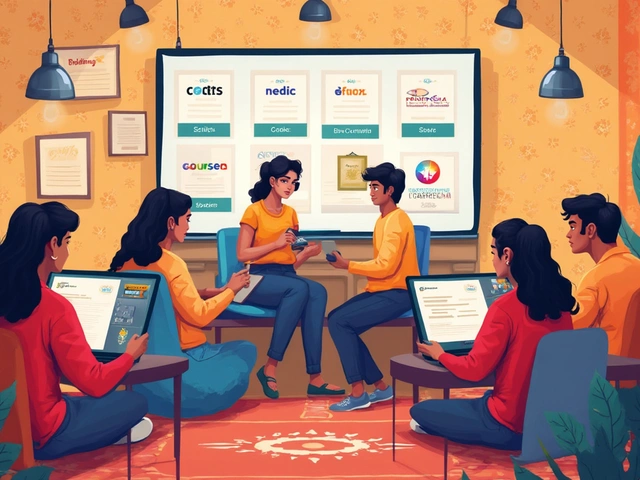
When you’re juggling a full-time job, family, or just trying to save money, the idea of online classes feels like a lifeline. But then you start wondering: are they actually worth it? Or are you just paying for a video lecture and a certificate that no one cares about?
I’ve talked to over 60 people in Chennai, Bangalore, and Pune who took online courses in the last two years-some for career upgrades, others to switch fields, and a few just to learn something new. The truth? It’s not a yes-or-no answer. It depends on what you want, how you learn, and what you’re willing to put in.
They work if you’re self-motivated
Online classes don’t have attendance checks. No professor will chase you if you miss a week. That freedom is great-if you already know how to manage your time. But if you’ve ever started a gym membership and stopped after two weeks, online learning might not be your fit.
One student I spoke with, Priya, a 28-year-old bank clerk, took a Google Data Analytics Certificate on Coursera while working 9-to-6. She set a rule: 45 minutes every morning before work. No phone. No distractions. She finished in 5 months. Today, she’s a junior data analyst. Her secret? Not the course. It was the habit.
Most online courses don’t fail because they’re bad. They fail because people treat them like TV shows. You click play, half-watch, then forget about it. The ones who succeed treat them like appointments-with themselves.
You can save money, but not always
Let’s be honest: a 6-month MBA from a top Indian college costs ₹8-15 lakhs. An online MBA from a UGC-approved university? ₹1.5-3 lakhs. That’s a huge difference. Many people choose online degrees just to avoid crushing debt.
But here’s the catch: not all online courses are cheap. Some platforms charge ₹25,000 for a 12-week course on digital marketing. Meanwhile, YouTube has free, high-quality tutorials on the same topic. So is the paid course worth it? Only if it includes:
- Personalized feedback from instructors
- Real projects with industry tools
- A recognized certificate employers actually check
If it’s just a video library with a PDF download, you’re better off with free resources. A 2024 survey by the Indian Institute of Management (IIM) Bangalore found that employers valued hands-on projects from online courses 3x more than certificates alone.
Some certificates mean nothing
There are thousands of online platforms. Some are trusted. Others? Not so much. I’ve seen resumes with certifications from "Global Academy of Digital Skills"-a site that looks professional but has no accreditation. Employers don’t recognize it. And no, Google or Microsoft badges don’t automatically make you hireable.
Here’s how to tell if a certificate is real:
- Check if the course is offered by a university, a well-known company (like Coursera, edX, Udacity), or a recognized body like NASSCOM or NSDC.
- Search the course name + "employer recognition" on Google. If you see LinkedIn profiles of people who got jobs after it, that’s a good sign.
- Look at the syllabus. Does it mention tools like Excel, Python, Tableau, or Salesforce? If it’s all theory with no hands-on practice, skip it.
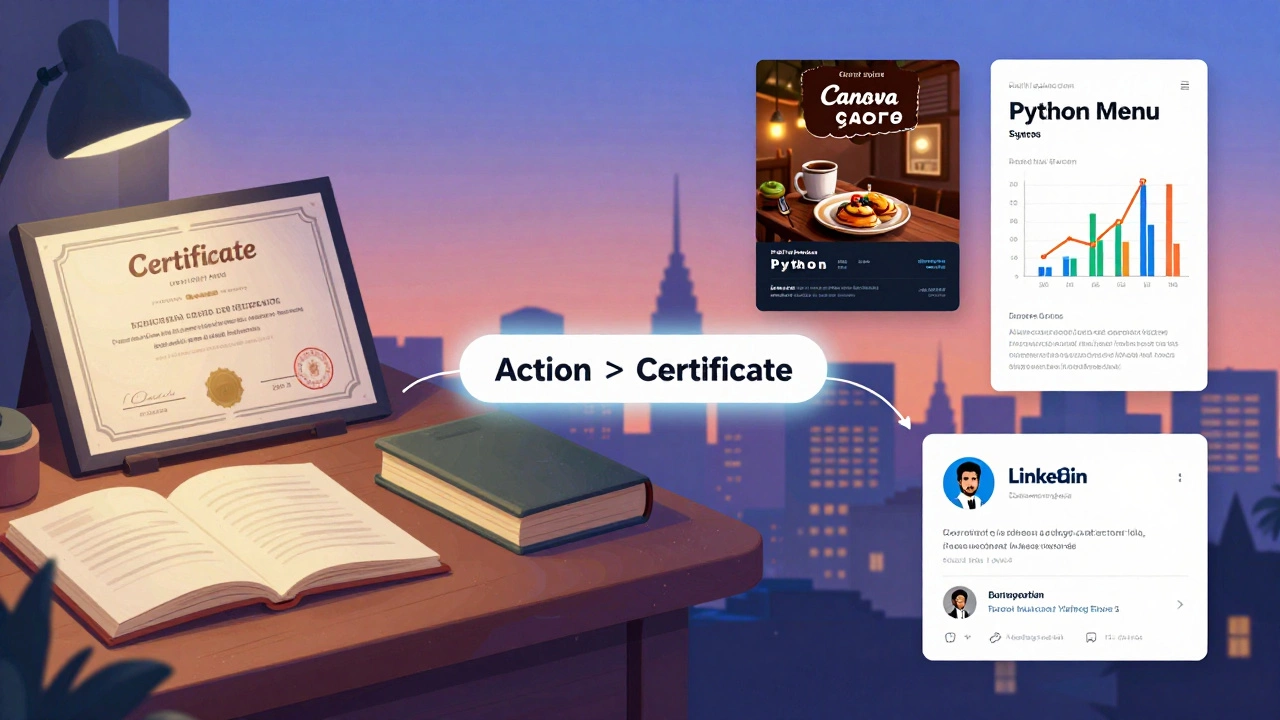
One woman in Hyderabad took a ₹12,000 course in graphic design. She finished it. Got the certificate. Applied to 80 jobs. Got zero replies. Then she built 5 real client projects on Fiverr, posted them on Instagram, and landed a freelance gig within a month. Her certificate? Still sitting in a folder. Her portfolio? Her ticket in.
Networking is harder-but not impossible
One big complaint about online classes? No campus. No coffee breaks with classmates. No group projects that turn into friendships.
But here’s what most people don’t say: you can build networks online too. The key is to go beyond the course forum.
Join LinkedIn groups related to your field. Comment on posts. Ask questions. Attend free webinars hosted by the course provider. Many platforms now offer live Q&A sessions with alumni. One student in Delhi took a course on digital marketing and joined the weekly Zoom calls. He ended up working with a classmate who started a startup. They’re still partners today.
Online learning doesn’t kill networking. It just asks you to be more intentional about it.
It’s not for everyone-especially if you need structure
Some people thrive in chaos. Others need a timetable, a classroom, a teacher watching over them. If you’re the kind of person who needs deadlines to get things done, online classes might frustrate you.
Take Ravi, a 22-year-old preparing for UPSC. He tried an online polity course. He watched the first two videos. Then he got distracted. After three months, he hadn’t finished Module 1. He switched to a coaching center with daily classes and fixed timings. Within six months, he cleared the prelims.
There’s no shame in needing structure. Not every learning style fits a screen. If you’re unsure, try a free week of a course first. See how you feel after 3 days. If you’re already thinking of quitting, it’s a sign.
What actually gets you hired?
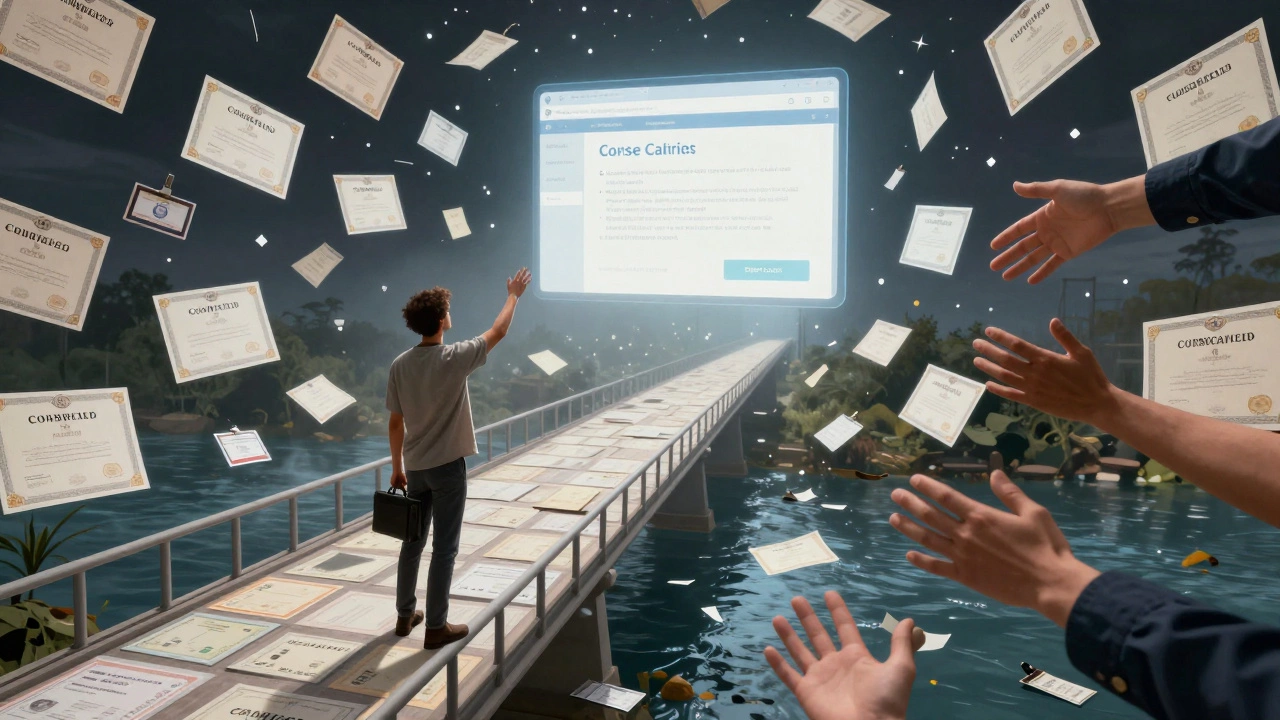
Let’s cut through the noise. Employers don’t care if you took 10 online courses. They care if you can do the job.
Here’s what works:
- Building something real-a website, a spreadsheet model, a social media campaign
- Getting feedback from someone in the field
- Showing progress over time
A friend of mine, Anjali, took a free course on Canva and started designing posters for local cafes. She posted her work on Instagram. One cafe owner hired her to redesign their menu. Then another. Now she runs a small design business. She never got a certificate. But she built a portfolio that spoke louder than any course ever could.
Online classes are tools. Not magic wands. They give you knowledge. But you have to turn that knowledge into action.
Bottom line: Are they worth it?
If you’re asking this question, you’re already thinking seriously about your future. That’s a good sign.
Online classes are worth taking if:
- You’re ready to put in the work, even when no one’s watching
- You pick courses with real projects and recognized credentials
- You use them to build something, not just collect certificates
- You’re okay with learning alone-and know how to reach out when you need help
They’re not worth it if:
- You expect them to do the work for you
- You’re buying them because everyone else is
- You think the certificate alone will change your career
Technology didn’t change learning. It just changed the delivery. The hard part-showing up, staying focused, creating value-is still yours to do.
Are free online courses worth it?
Yes-if you use them right. Free courses on YouTube, Khan Academy, or NPTEL can teach you the same basics as paid ones. But they rarely offer feedback, projects, or certificates employers recognize. Use free courses to explore a field. If you like it, invest in a paid one with hands-on work.
Can I get a job with just an online certificate?
Rarely. Employers look for proof you can do the job-not just that you finished a course. A certificate helps, but only if it’s from a trusted provider and paired with real work. Build a portfolio, contribute to open-source projects, or freelance. That’s what gets you hired.
Which online courses are most valued in India?
Courses in data analysis, digital marketing, cloud computing (AWS, Azure), and basic programming (Python, SQL) are in high demand. Look for programs from Coursera, edX, Swayam, or NASSCOM-certified partners. Avoid courses that don’t mention tools or projects.
How long should I spend on an online course each day?
Consistency beats intensity. 30-45 minutes a day, 5 days a week, is better than 5 hours once a week. Use the Pomodoro technique: 25 minutes focused, 5 minutes break. Most people quit because they try to do too much too fast.
Do companies in India accept online degrees?
Yes, but only from UGC-recognized universities. Degrees from IGNOU, Symbiosis Online, or NMIMS are accepted. Avoid private institutes that aren’t listed on the UGC website. For certifications (not degrees), companies care more about skills than the platform.
What to do next
Don’t wait for the perfect course. Start small.
- Find one free course on a topic you’re curious about.
- Finish the first module.
- Do one small project-even if it’s just for yourself.
- Share it with one person.
If you do that, you’ve already done more than 80% of the people who just click "Enroll" and never open the course again.