
Government Job Credit Score Impact Checker
Select a job category and enter your approximate credit status to see how it might affect your selection process based on current government recruitment norms.
Here is a myth that keeps many aspirants up at night: Credit Score is the golden ticket to landing a position in the public sector. You hear it from friends, you read it on forums, and you start worrying about that one missed EMI from three years ago. But does your CIBIL or Equifax report actually decide if you get hired by the government?
The short answer is no, not directly. In most cases, especially for standard civil services roles like those under UPSC or SSC, your credit history doesn't determine your selection. However, the story gets more interesting when you look at specific high-security roles or banking sectors within the government framework. Let's break down what really matters, where the confusion comes from, and how you should handle your financial hygiene while preparing for exams.
Why People Think Credit Scores Matter
The confusion stems from mixing up private sector hiring with public sector recruitment. In the corporate world, particularly in finance, tech, and sales, employers often run credit checks. They want to know if you are financially responsible because they might be handling company money or sensitive client data. If you have a history of bankruptcy or massive debt, some companies see this as a risk factor for integrity or stress-related performance issues.
But government jobs operate on a different set of rules. The primary filter is merit-your rank in written exams and interview performance. Once you clear these hurdles, the next step is verification. This is where people get nervous. They assume "verification" means checking their bank statements and loan defaults. It usually doesn't. For the vast majority of central and state government positions in India, there is no mandatory requirement to submit a credit report during the Document Verification (DV) stage.
The Actual Vetting Process for Civil Services
When you crack an exam like the UPSC Civil Services Examination or SSC CGL, the focus shifts to character and antecedents. This process is known as Police Verification or Character Verification. The authorities check for criminal records, educational authenticity, and sometimes political affiliations. They want to ensure you haven't been involved in serious crimes or provided false information about your identity.
Financial status plays a minor role here, but only in extreme cases. If you are declared bankrupt by a court, it might raise questions about your legal standing. However, having a low credit score due to late payments on a personal loan or credit card rarely triggers a rejection. The verifying officer looks for red flags like fraud, forgery, or criminal negligence, not poor financial management skills.
| Job Category | Credit Check Required? | Impact of Low Score | Primary Focus |
|---|---|---|---|
| Civil Services (IAS, IPS) | No | Negligible | Merit & Character |
| Public Sector Banks (PSBs) | Yes (Internal) | Moderate | Financial Prudence |
| Defense & Intelligence | Strict Background Check | High (if linked to fraud) | Security Clearance |
| State Govt Clerical | Rarely | Low | Eligibility Criteria |
Exceptions: When Your Financial History Does Matter
While general administrative roles don't care about your credit score, certain specialized domains do. If you are aiming for a career in Public Sector Banks like SBI, PNB, or RBI Grade B, the scenario changes. These institutions deal with money daily. While they may not pull your external credit bureau report during initial screening, they conduct thorough background verifications once you are selected. If you have unresolved loans or a history of defaulting on debts specifically related to financial obligations, it could affect your suitability for a role that requires handling public funds.
Similarly, roles in intelligence agencies such as RAW or IB undergo rigorous security clearances. These checks go beyond simple police verification. They investigate your lifestyle, associations, and financial stability. Why? Because a person with overwhelming unmanageable debt is considered vulnerable to bribery or coercion. In this context, a terrible credit history isn't just a number; it's a potential security risk. So, while a score of 650 won't stop you from becoming a clerk, a pattern of financial irresponsibility might hinder your entry into high-stakes security roles.
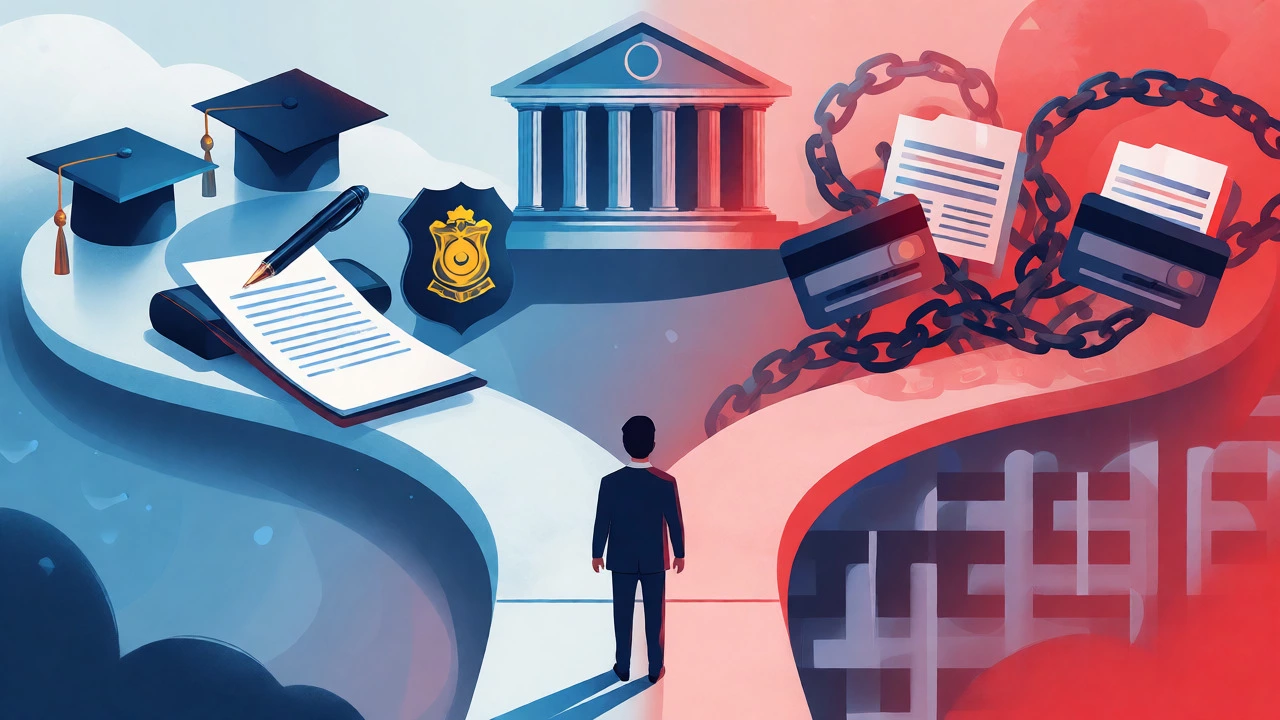
Income Tax and Asset Declaration: The Real Financial Check
Once you join a government job, your financial life becomes transparent. Under the Right to Information Act and various service rules, government employees must declare their assets and liabilities annually. This is where your past financial behavior catches up with you, not during hiring, but during service.
If you took huge loans before joining and struggle to repay them, it doesn't disqualify you from the job. However, if you acquire assets disproportionate to your known sources of income later, you might face scrutiny. Some aspirants try to game the system by taking large loans right before joining to buy assets, hoping the salary will cover it. This is risky. The key takeaway is that the government cares about legality and transparency, not your creditworthiness in the market sense.
How to Prepare Financially While Studying
You might wonder, "If my credit score doesn't matter, can I ignore my finances entirely?" Absolutely not. Preparing for competitive exams takes time-often two to four years. During this period, managing your finances wisely helps reduce stress, which directly impacts your study efficiency.
- Avoid High-Interest Debt: Don't take personal loans for coaching unless absolutely necessary. The interest burden adds mental pressure.
- Keep Records Clean: Ensure all your educational certificates and ID proofs match perfectly. Discrepancies here cause more delays than credit scores ever will.
- Emergency Fund: Keep a small buffer for exam fees and travel. Relying on credit cards for last-minute train tickets is fine, but paying them off on time builds good habits.
Think of your financial health as part of your overall readiness. A chaotic financial situation creates anxiety. Anxiety distracts you from studying. Therefore, maintaining a decent credit profile is a side benefit of being organized, rather than a prerequisite for employment.

What About Private Sector Internships?
Many candidates work in the private sector while preparing for government exams. If you leave a job with unpaid dues or disputed accounts, it might complicate your relieving letter process. Employers sometimes withhold documents until settlements are made. Since you need these documents for your government job application, ensure your exit from any previous employer is clean. This isn't about your credit score per se, but about document availability. No relieving letter, no proof of experience, and potentially no job offer acceptance.
Final Verdict: Don't Stress Over the Number
To wrap this up, your credit score is not a gatekeeper for government jobs in India. You won't be rejected because your score dropped below 700. The system prioritizes merit, eligibility criteria (age, education, nationality), and character verification. Focus your energy on mastering the syllabus, practicing mock tests, and keeping your documentation flawless.
However, keep your financial house in order. Avoid fraud, pay taxes honestly, and stay away from illegal financial schemes. These are the real pitfalls. As long as you are legally sound and financially honest, your credit score is just a number that banks use to lend you money-not the government use to hire you.
Does UPSC check credit score?
No, the Union Public Service Commission (UPSC) does not check credit scores during the selection process. The focus is on academic merit, age limits, and character verification through police reports.
Can bad credit prevent me from getting a government job?
Generally, no. Bad credit history rarely affects standard government job eligibility. Exceptions exist for high-security roles or banking positions where financial integrity is scrutinized more closely.
Do I need to submit bank statements for government job DV?
Usually, no. Document Verification (DV) focuses on original certificates, caste certificates, and identity proofs. Bank statements are typically required only if you claim fee exemptions based on economic weakness.
Is credit score important for RBI Grade B jobs?
While not a strict cutoff criterion like marks, RBI conducts detailed background checks. Significant financial irregularities or defaults could raise concerns about your suitability for a regulatory body role.
What happens if I have a loan default during government service?
It generally does not lead to termination. However, if the default leads to legal action or garnishment of wages, it becomes a matter of record. Consistent financial discipline is encouraged but not strictly enforced via credit scores.