
Competition Health Checker
Answer the following 5 questions to determine if your current approach to competition is sustainable or if you need to adjust your strategy.
Your Competition Profile
Imagine two students sitting in the same library. One is frantically flipping through pages, eyes wide with panic, convinced that if they don't memorize this specific formula right now, their future is ruined. The other is reading calmly, taking notes, and planning a break for later. Both are preparing for the same high-stakes test. Which one is actually winning? The answer might surprise you: it isn't about who knows more facts, but who can sustain the effort without burning out. Healthy competition is a delicate balance between drive and distress, and getting it wrong can cost you more than just marks.
In India, the pressure to perform in competitive exams like UPSC, JEE, NEET, or CAT is immense. We often hear that "pressure makes diamonds." But does it really? Or does it sometimes just shatter them? Understanding the psychology behind competition helps us decide when the drive is fueling us and when it's eating us alive.
The Two Sides of the Competition Coin
Psychologists distinguish between two types of competitiveness. There is "eustress," which is positive stress that motivates you to perform better. Then there is "distress," which is negative stress that paralyzes you. When you compete with yourself to improve your last score, that's usually eustress. It feels challenging but manageable. You know what to do, and you feel capable of handling it.
However, when you start comparing your Chapter 3 to someone else's Chapter 10, things get messy. This is where social comparison theory kicks in. We naturally look at peers to gauge our own standing. In a healthy context, seeing a friend succeed inspires you to work harder. In an unhealthy context, it triggers fear of failure. If you believe your self-worth depends entirely on ranking above others, every interaction becomes a threat rather than an opportunity.
Here is a simple rule of thumb: if you can sleep well after a study session, your competition level is likely healthy. If you lie awake worrying about whether you studied enough compared to your batchmate, you've crossed into the danger zone.
How Competition Affects Your Brain
Your brain reacts to competition based on how you frame it. Neuroscientists have found that when we view a task as a challenge ("Can I solve this?"), our prefrontal cortex-the part responsible for logic and planning-stays active. This helps us focus and retain information.
But when we view the same task as a threat ("What if I fail?"), the amygdala takes over. This triggers the fight-or-flight response. Your heart rate goes up, your digestion slows down, and your ability to think clearly drops. For exam aspirants, this means less efficient studying and higher anxiety levels.
Chronic activation of this stress response leads to burnout. Burnout isn't just being tired; it's a state of emotional, physical, and mental exhaustion caused by excessive and prolonged stress. Symptoms include cynicism, reduced sense of personal accomplishment, and physical ailments like headaches or stomach issues. Many top performers fall victim to this because they mistake exhaustion for dedication.
| Aspect | Healthy Competition | Unhealthy Competition |
|---|---|---|
| Motivation Source | Intrinsic desire to learn and improve | Fear of losing to others |
| Reaction to Failure | Views mistakes as data for improvement | Views mistakes as proof of inadequacy |
| Social Interaction | Collaborative; shares resources | Secretive; hoards information |
| Rest Habits | Schedules breaks intentionally | Sacrifices sleep/health for extra hours |
| Self-Worth | Independent of rank/score | Tied directly to performance metrics |

The Trap of Social Comparison
In today's digital age, comparison has become non-stop. Study groups on WhatsApp, Instagram reels showing "5 AM study routines," and LinkedIn posts about cracking exams create a distorted reality. We see only the highlights, not the struggles. This phenomenon, known as the "highlight reel effect," makes us feel like everyone else is progressing faster than us.
For example, a student preparing for the Civil Services Examination might see a peer post about clearing Prelims. That peer might have failed twice before. But the observer only sees the success. This gap between perception and reality fuels unnecessary anxiety. To combat this, try limiting exposure to social media during peak study hours. Focus on your own progress logs rather than external benchmarks.
A practical tip: Keep a "Win Journal." Every day, write down three things you did well, no matter how small. Did you understand a difficult concept? Did you stick to your schedule? This shifts your focus from "where am I compared to others" to "how far have I come?"
Building a Sustainable Strategy
Being competitive doesn't mean working harder; it means working smarter and staying consistent. Here’s how to maintain a healthy edge:
- Set Process Goals, Not Just Outcome Goals: Instead of aiming for "Top 100 Rank," aim for "Complete 2 mock tests per week with analysis." Process goals are within your control, reducing anxiety.
- Embrace Rest as Part of Training: Athletes rest to recover muscles. Your brain needs rest to consolidate memory. Use techniques like the Pomodoro method (25 minutes study, 5 minutes break) to keep fatigue at bay.
- Create a Support System: Talk to mentors, counselors, or friends who understand the journey. Isolation amplifies stress. Sharing your fears normalizes them.
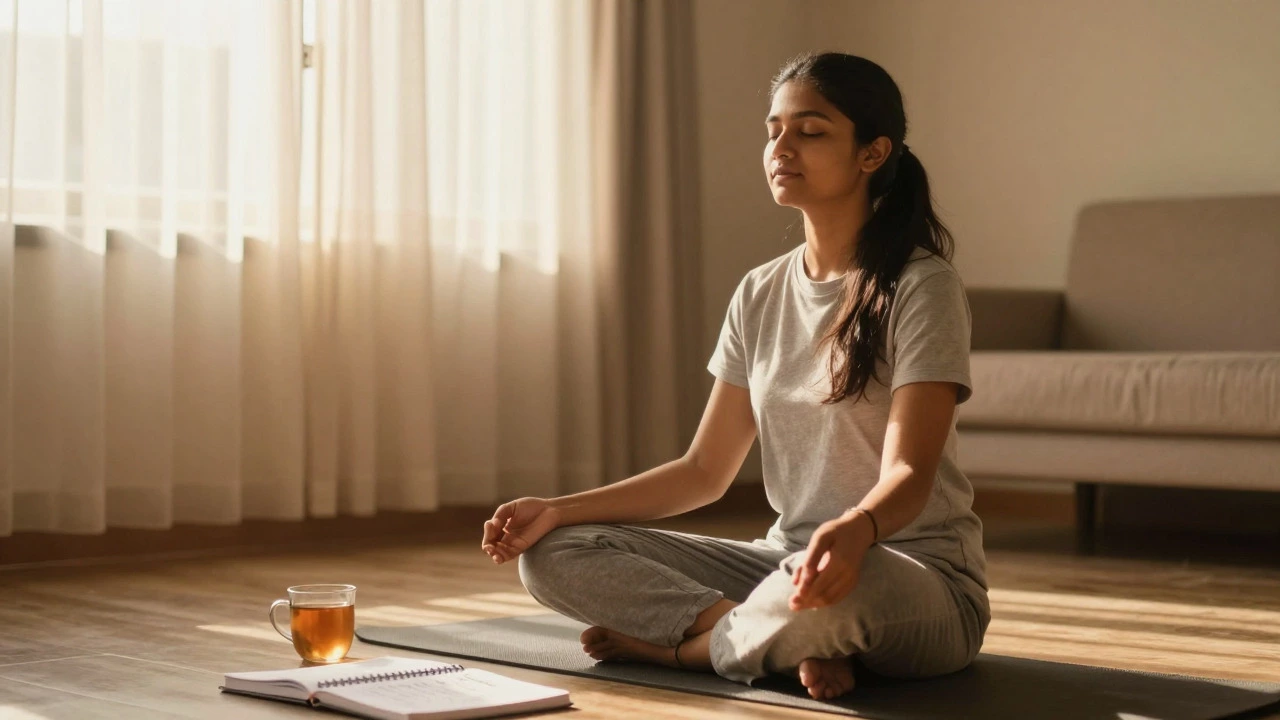
- Practice Mindfulness: Even five minutes of deep breathing or meditation can lower cortisol levels. It helps you return to the present moment instead of worrying about the future result.
Remember, the goal of education is to build knowledge and skills, not just to secure a job. While the job is important, the person you become during the preparation process matters even more. If you emerge from the exam season mentally broken, the victory feels hollow.
When to Seek Help
Sometimes, the pressure becomes too much to handle alone. If you find yourself unable to concentrate for more than 15 minutes, experiencing sudden mood swings, or having physical symptoms like unexplained weight loss or insomnia, it’s time to seek professional help. Counseling isn't a sign of weakness; it's a strategic tool for performance enhancement. Many top achievers use coaches and psychologists to manage their mindset.
In Chennai, many coaching centers now offer integrated counseling services specifically for exam aspirants. Don't hesitate to use these resources. Your mental health is your most valuable asset in any competitive arena.
Final Thoughts on Balance
So, is it healthy to be competitive? Yes, absolutely-but only if you define the terms correctly. Healthy competition is a marathon, not a sprint. It requires discipline, self-awareness, and resilience. It allows you to push your limits without breaking your spirit. By focusing on your own growth, managing your stress effectively, and maintaining a balanced lifestyle, you can harness the power of competition to achieve your dreams without sacrificing your well-being. The race is long, so pace yourself wisely.
Does being competitive lead to burnout?
Not necessarily. Burnout occurs when stress is chronic and unmanaged. If you practice self-care, set realistic goals, and take regular breaks, competition can be a sustainable motivator rather than a cause of burnout.
How do I stop comparing myself to my peers?
Limit social media usage during study periods. Focus on your own progress by keeping a daily log of achievements. Remember that everyone's journey is different, and external comparisons often reflect other people's highlight reels, not their full reality.
Is it okay to take a break during intense exam preparation?
Yes, it is essential. Breaks allow your brain to consolidate information and reduce fatigue. Scheduled rest improves long-term retention and prevents the diminishing returns associated with overworking.
What is the difference between intrinsic and extrinsic motivation?
Intrinsic motivation comes from within, such as curiosity or the joy of learning. Extrinsic motivation comes from external rewards, like grades or rankings. Healthy competition often blends both, but relying too heavily on extrinsic factors can increase anxiety.
How much sleep do exam aspirants need?
Most adults need 7-9 hours of quality sleep per night. Sleep is crucial for memory consolidation and cognitive function. Sacrificing sleep for extra study hours often results in lower efficiency and poorer retention.