Math & Physics Anxiety Self-Assessment
When you see a complex Math problem, what is your first reaction?
How do you typically prepare for Physics exams?
What frustrates you most about these subjects?
Which study approach works best for you?
Your Assessment Result
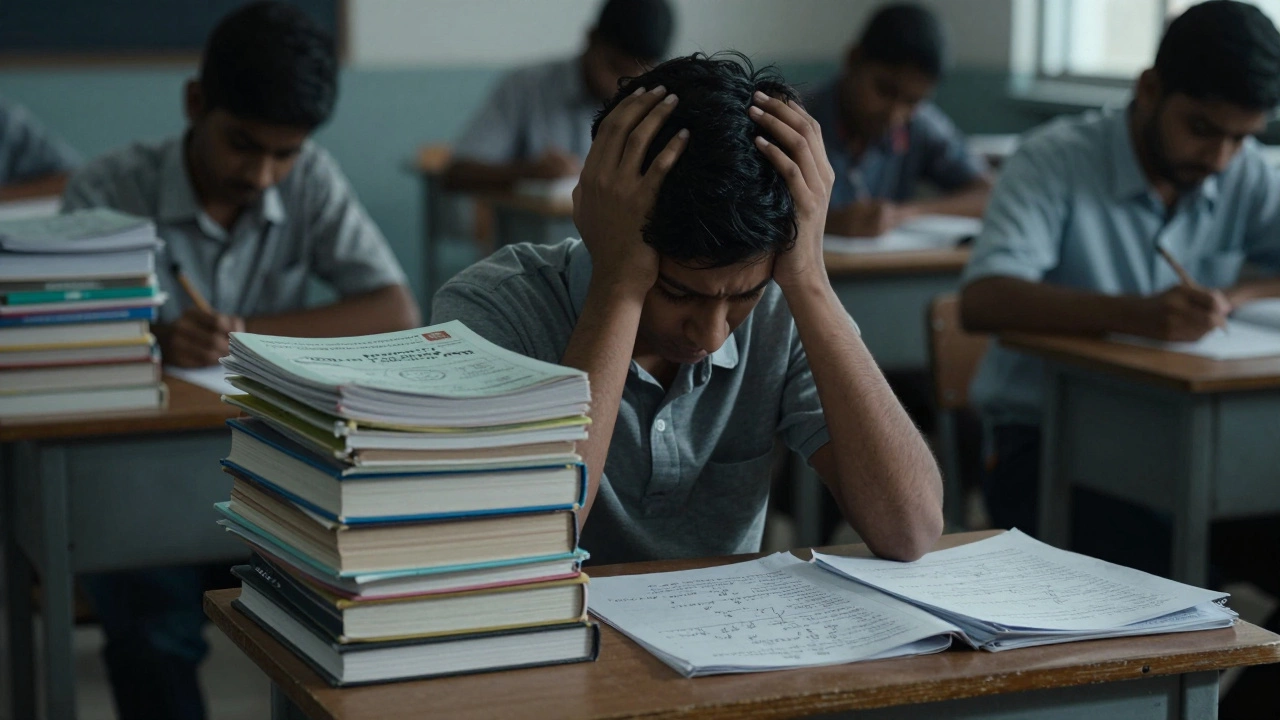
Walk into any classroom in India, and you will hear the same groan when a specific period starts. It is not history, and it is not geography. For millions of students following the CBSE syllabus, which stands for Central Board of Secondary Education, the dread usually centers on one or two subjects. If you ask students directly, the answer is almost always Mathematics. But if you look at the data from career counselors and school surveys, Physics often joins Math at the top of the "most hated" list. Why do these subjects carry such a heavy reputation? Is it the difficulty, or is it something deeper about how we teach them?
The Number One Villain: Mathematics
Mathematics holds the crown for the most disliked subject across almost every grade level in the CBSE system. The fear of numbers, known as math anxiety, starts early. By the time students reach Class 10 and Class 12, this anxiety has turned into full-blown avoidance. Many students believe that Math is only for "geniuses" or people who are naturally good at calculations. This myth creates a psychological barrier before they even open their textbook.
The problem isn't just the content. It is the way it is tested. In the CBSE board exams, Math requires step-by-step precision. A small error in calculation can cost you marks for the entire question. Unlike English or Social Studies, where you can write an opinion and get partial credit for effort, Math is binary. You are either right or wrong. This high-stakes environment makes students feel vulnerable. They spend hours memorizing formulas instead of understanding concepts because they are terrified of making a mistake during the exam.
- Rote Memorization: Students memorize formulas without knowing how to derive them, leading to confusion when problems change slightly.
- Lack of Real-World Context: Textbooks rarely show how algebra helps in daily life, making the subject feel abstract and useless.
- Speed Pressure: Exams often require solving complex problems quickly, causing panic among average learners.
The Runner-Up: Physics
If Math is the villain, Physics is its close accomplice. Physics is consistently ranked as the second most disliked subject, especially in Classes 11 and 12. The reason is similar to Math but with a twist. Physics requires both mathematical skill and conceptual imagination. You need to visualize forces, motion, and energy fields in your head while simultaneously crunching numbers.
Many students struggle because they cannot see the application of topics like electromagnetism or thermodynamics in their immediate lives. When a teacher explains Newton's laws using idealized scenarios that ignore friction and air resistance, students find it hard to connect with reality. The gap between the theoretical world of the textbook and the practical world outside the window is wide. This disconnect leads to boredom and frustration.
Furthermore, the volume of content in the CBSE Physics syllabus is massive. Students have to master derivations, numerical problems, and diagram-based questions. The pressure to score high in Physics is immense because it is a core science subject that determines eligibility for engineering and medical streams. This weight makes the subject feel like a burden rather than a tool for understanding the universe.
Why Do Students Hate These Subjects?
To understand why Math and Physics are so disliked, we need to look beyond the curriculum. The root causes are often pedagogical and cultural. In many Indian schools, teaching is still heavily focused on lecture-style instruction. The teacher writes on the board, and students copy notes. There is little room for experimentation, discussion, or creative problem-solving.
This traditional method works for subjects like History, where facts can be listed and remembered. But it fails for Math and Science, which require active engagement. When students are passive recipients of information, they lose interest. They start seeing these subjects as hurdles to clear rather than skills to acquire. The culture of competition also plays a role. Parents and teachers often compare students based on their scores in Math and Science, labeling those who struggle as "weak." This stigma reinforces the dislike.
| Factor | Mathematics | Physics |
|---|---|---|
| Primary Barrier | Fear of making mistakes | Difficulty visualizing concepts |
| Nature of Questions | Precise, step-by-step solutions | Mixed theory and numerical application |
| Real-World Connection | Often perceived as abstract | Visible but complex applications |
| Impact on Career Choice | High (Engineering/Commerce) | Very High (Engineering/Medicine) |
The Role of Teaching Methods
The way a subject is taught matters more than the subject itself. A great teacher can make Calculus fascinating by showing how it predicts population growth or financial trends. A poor teacher can make Biology boring by forcing students to memorize Latin names without explaining their significance. Unfortunately, many CBSE schools lack resources for interactive learning. Labs are often under-equipped, and teachers are overburdened with large classes.
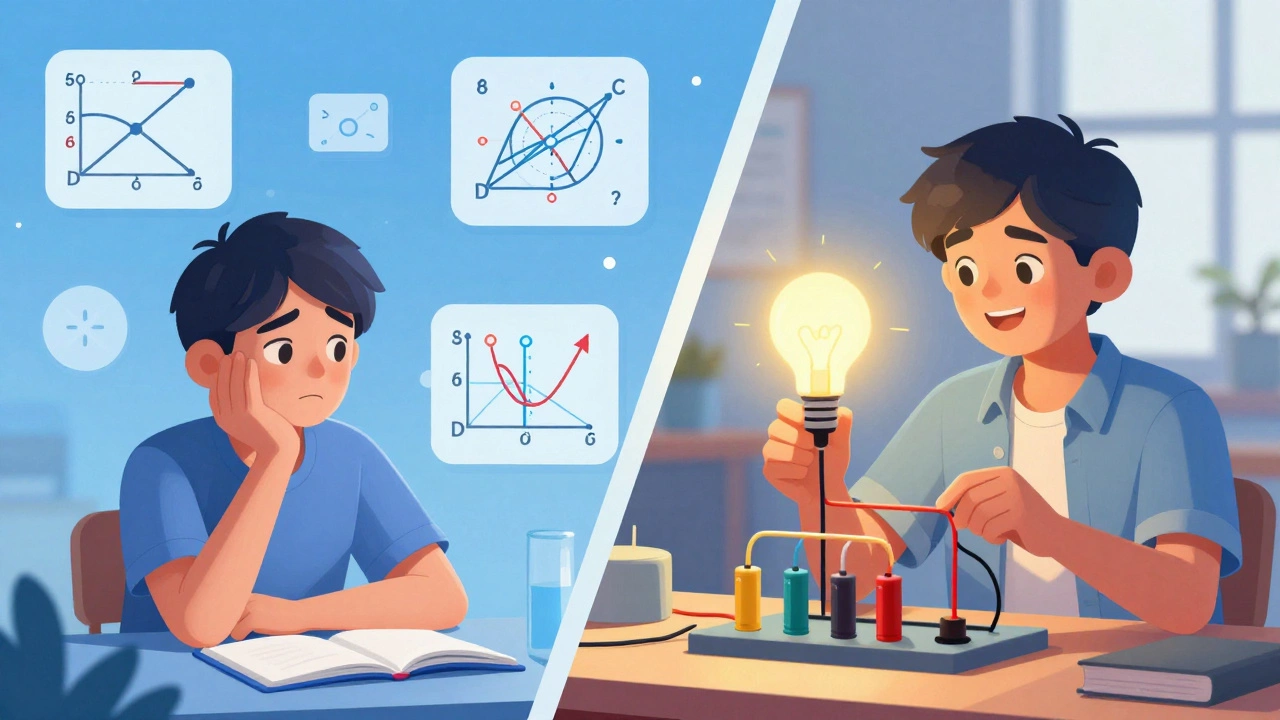
In contrast, subjects like Computer Science or Informatics Practices are gaining popularity because they are hands-on. Students write code, see immediate results, and fix errors in real-time. This feedback loop is engaging. Math and Physics need similar interactive approaches. Using simulations, games, and real-life projects can bridge the gap. For example, building a simple circuit can teach electricity better than reading about Ohm's law. However, implementing these methods requires time and training, which are often scarce in the current system.
Is There a Silver Lining?
Despite the widespread dislike, there is hope. The CBSE board has been introducing reforms to make learning more holistic. The focus is shifting from rote memorization to competency-based education. New question papers include case-based questions that require students to apply knowledge to real-world situations. This change aims to reduce the fear of "tricky" questions and encourage critical thinking.
Additionally, there is a growing movement among educators to promote growth mindset. The idea is that intelligence is not fixed. With practice and the right strategies, anyone can improve in Math and Physics. Schools are starting to offer extra support sessions and peer-learning groups. These initiatives help students realize that struggling is part of the learning process, not a sign of failure.
Parents also play a crucial role. Instead of pressuring children to score 95% in Math, they can focus on understanding the concepts. Celebrating small improvements and encouraging curiosity can transform the relationship with these subjects. When students feel supported rather than judged, their anxiety decreases, and their performance improves.
How to Overcome the Dislike
If you are a student struggling with Math or Physics, here are some practical steps to change your perspective. First, stop comparing yourself to others. Everyone learns at their own pace. Second, break down complex topics into smaller chunks. Don't try to learn all of Algebra in one day. Focus on one concept at a time. Third, seek help early. If you don't understand a topic, ask your teacher or join an online forum. Waiting until the last minute only increases stress.
Finally, try to find the beauty in the subject. Math is the language of patterns, and Physics is the story of how the universe works. Look for connections in everyday life. Notice how bridges are built using triangular structures for stability. Observe how light bends through a glass of water. When you see the relevance, the subject becomes less intimidating and more interesting.
Why is Math considered the most difficult subject in CBSE?
Math is considered difficult because it requires logical reasoning and precise execution. Unlike other subjects, there is no room for approximation. Small errors in calculation can lead to incorrect answers, causing students to lose confidence. Additionally, the cumulative nature of Math means that missing one concept can make future topics harder to understand.
Can a student succeed in engineering without liking Physics?
Yes, it is possible to succeed in engineering without loving Physics, but it requires dedication. Engineering relies heavily on applied physics principles. While you may not enjoy the theoretical aspects, developing a functional understanding is essential. Many successful engineers found ways to appreciate the practical applications of Physics through hands-on projects and internships.
How does the CBSE board address student anxiety in Math?
The CBSE board has introduced competency-based assessments and internal assessments to reduce exam pressure. They also provide sample papers and previous year questions to help students familiarize themselves with the pattern. Additionally, the board encourages schools to implement mental health awareness programs and counseling services to support students dealing with academic stress.
What are some effective study tips for Physics?
Effective tips for Physics include drawing diagrams for every problem, understanding the derivation of formulas rather than just memorizing them, and practicing numerical problems regularly. It is also helpful to relate concepts to real-life examples. For instance, connecting Newton's laws to sports or driving can make them easier to remember and apply.
Is it true that girls perform worse in Math and Science?
No, this is a myth. Research shows that gender does not determine ability in Math and Science. Differences in performance are often due to societal expectations, stereotypes, and access to resources. When given equal opportunities and encouragement, girls perform equally well or better than boys in these subjects. Breaking these stereotypes is crucial for creating an inclusive learning environment.