
NEET Biology Chapter Strategy Planner
Genetics & Evolution
Logical deduction & Probability
Human Physiology
Voluminous data & Inter-system links
Plant Physiology
Abstract processes & Biochemistry
Recommended Action Plan
Ask any NEET topper about their sleepless nights, and they won't talk about the easy marks in Botany. They'll talk about the moment they stared at a pedigree chart or tried to memorize the Krebs cycle without crying. If you are preparing for NEET Biology, you know it’s not just about reading NCERT; it’s about surviving specific conceptual monsters that trap even the brightest students.
There is no single "hardest" chapter because difficulty is subjective. But if we look at error rates from mock tests across coaching centers in Bangalore and Delhi, three areas consistently bleed student scores: Genetics and Evolution, Human Physiology, and Plant Physiology. These aren't hard because the facts are obscure. They are hard because they require logic, integration, and memory working together under pressure.
| Chapter | Primary Difficulty Factor | Average Time per Question | Common Pitfall |
|---|---|---|---|
| Genetics and Evolution | Logical deduction & Probability | 90-120 seconds | Misinterpreting pedigree charts |
| Human Physiology | Voluminous data & Inter-system links | 45-60 seconds | Confusing hormonal feedback loops |
| Plant Physiology | Abstract processes & Biochemistry | 60-90 seconds | Forgetting enzyme names/steps |
Why Genetics and Evolution Breaks Students
Let's be honest: Genetics is math disguised as biology. In most other chapters, you read a fact, you remember it, you answer. In Genetics, you have to solve a puzzle. The National Testing Agency (NTA) loves to twist standard Mendelian ratios into complex scenarios involving linkage, crossing over, and sex-linked inheritance.
The real killer isn't the theory; it's the application. You might know what a dihybrid cross is, but can you calculate the probability of a child being affected by a rare autosomal recessive disorder when given a three-generation family tree? Most students freeze here. They waste two minutes trying to draw Punnett squares mentally, only to get it wrong because they missed a carrier status in generation one.
- The Trap: Assuming simple dominance when incomplete dominance or codominance is at play.
- The Fix: Practice 10 numerical problems daily. Don't just read solutions. Solve them on paper until your hand hurts.
Evolution adds another layer of confusion. While shorter than Genetics, concepts like Hardy-Weinberg equilibrium and natural selection mechanisms are often tested with tricky language. One word change-like shifting from "mutation rate" to "gene flow"-can flip the answer entirely.
Human Physiology: The Memory Marathon
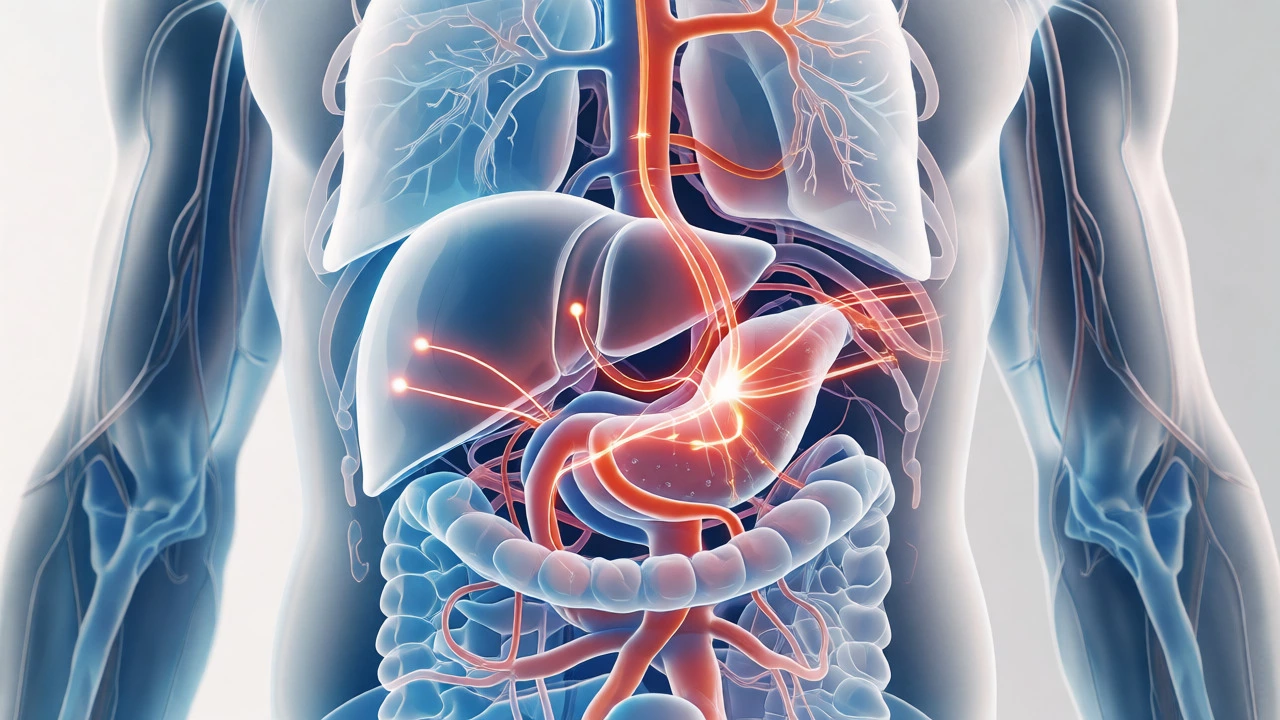
If Genetics is a puzzle, Human Physiology is a library. This unit covers digestion, respiration, circulation, excretion, locomotion, neural control, endocrine glands, reproduction, and health. That is nearly 30% of the total Biology syllabus. The volume is intimidating, but the real challenge is retention.
Consider the Endocrine System. You need to remember which gland secretes which hormone, what that hormone does, where its receptors are located, and what happens if there is too much or too little of it. Now multiply that by every system in the body. The brain struggles to store this discrete information unless it's connected. Students who try to rote-memorize lists fail. Those who understand the feedback loops succeed.
For example, don't just memorize that Insulin lowers blood sugar. Understand how it interacts with Glucagon during fasting versus after a meal. When you link physiology to daily life-like why you feel shaky when hungry-the data sticks. Also, pay close attention to diagrams in NCERT. NTA has increasingly asked questions based on minor labels in anatomical diagrams that many students skip.
Plant Physiology: The Abstract Nightmare
Many students assume Botany is easier than Zoology. Then they hit Plant Physiology. Unlike animal systems, plant processes happen invisibly inside cells. You can't observe photosynthesis happening in your kitchen sink. You have to visualize molecular events.
The Light Reaction and Calvin Cycle are notorious for high error rates. Why? Because the steps are sequential and dependent. If you forget where ATP is generated or how NADPH is utilized, the whole chain breaks down in your mind. Similarly, topics like Photorespiration and C3 vs. C4 pathways require precise understanding of cellular localization-mesophyll cells versus bundle sheath cells.
Another pain point is Plant Growth Regulators. Auxins, Gibberellins, Cytokinins, Abscisic Acid, and Ethylene each have overlapping functions. It’s easy to mix up which hormone causes dormancy versus which promotes germination. Mnemonics help, but context helps more. Think of Ethylene as the "ripening gas"-you’ve seen bananas ripen faster in a closed bag. That’s Ethylene working. Anchor abstract concepts to physical reality.
How to Attack These Chapters Without Burning Out
You don't need to master these chapters first. In fact, starting with Genetics can be demoralizing. Here is a strategic approach that works for thousands of aspirants:
- Start with Human Physiology: It feels relatable. Use flowcharts to map out systems. Connect Digestion to Respiration via energy production. Build a mental web.
- Tackle Plant Physiology Second: Focus on the "Big Three": Photosynthesis, Respiration, and Transport. Ignore obscure details initially. Master the core cycles.
- Save Genetics for Last (or Parallel): Since it requires active problem-solving rather than passive reading, keep it fresh. Do small doses daily instead of long weekend binges.
Use the "Active Recall" method. Close the book. Draw the Krebs cycle from memory. If you miss an enzyme, open the book, fix it, close it, and draw again. Repeat until perfect. Passive reading creates the illusion of competence. Active recall reveals the truth.
Common Myths About Difficult Chapters
One big myth is that difficult chapters yield fewer questions. False. NCERT aligns question weightage closely with content depth. Genetics and Evolution typically account for 8-10 questions. Human Physiology can touch 15-20 questions depending on the year. Ignoring these because they are "hard" is like skipping lunch because chewing takes effort.
Another myth is that you need advanced biochemistry knowledge. You don't. NEET stays within the NCERT boundary. The complexity comes from combining basic concepts, not from introducing new ones. Stick to the textbook. Supplemental books often add unnecessary noise that confuses more than it clarifies.
Is Genetics really the hardest chapter in NEET?
Statistically, yes, for logical reasoning errors. However, many students find Human Physiology harder due to the sheer volume of memorization required. Difficulty depends on whether you struggle more with calculation/logic (Genetics) or retention/volume (Physiology).
Should I skip difficult chapters if I'm short on time?
Never skip them entirely. Genetics and Physiology carry significant weightage. Instead of mastering every sub-topic, focus on high-yield areas like Pedigree Analysis in Genetics or Hormonal Control in Physiology. Partial mastery yields partial marks; zero mastery yields zero.
Which NCERT diagrams are most important for these tough chapters?
Focus on the Double Helix structure, Labeled Anatomy of the Heart, Nephron Structure, and the Steps of Photosynthesis (Light and Dark reactions). Questions often come directly from unlabelled parts of these specific diagrams.
How many hours should I dedicate to Plant Physiology?
Allocate 20-25% of your Botany study time. Ensure you can explain the Calvin Cycle and C3/C4 differences clearly. Once you grasp the core mechanisms, revision becomes fast. The initial learning curve is steep, but maintenance is low.
Are previous year questions enough for Genetics?
No. Previous Year Questions (PYQs) show the pattern, but they rarely cover the full range of logical twists. Solve additional practice sets specifically designed for genetics numericals to build speed and accuracy. Aim for 50+ solved problems beyond PYQs.
Mastering these chapters doesn't mean becoming a biologist overnight. It means respecting the complexity and breaking it down. Start today. Pick one concept from Genetics, one diagram from Physiology, and one cycle from Botany. Conquer them before tomorrow. Your future self will thank you.