Python Career Transition Planner
Estimate your job readiness timeline and identify the best role for your profile based on age, experience, and learning pace.
Fill out your profile details and click "Analyze My Path" to see your personalized roadmap.
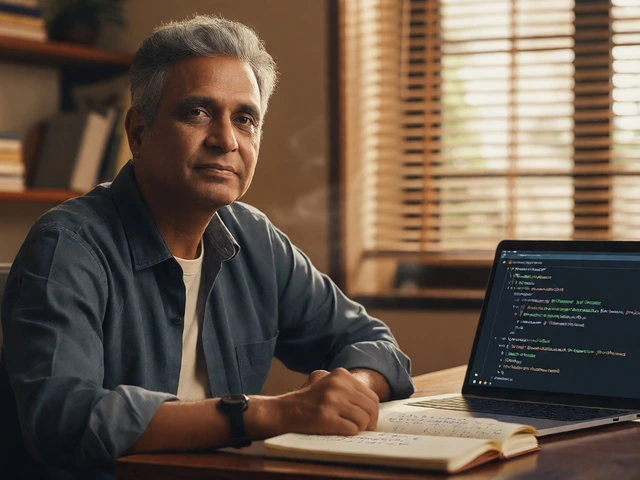
You are fifty years old. You have decades of experience in banking, teaching, or maybe running your own small business. But you look at the news and see headlines about AI, data science, and automation. A quiet question starts to nag at you: Can I learn Python at 50 and get a job?
The short answer is yes. The long answer is more interesting, and honestly, more important. It isn't just about typing code faster than a twenty-year-old. It's about leveraging what you already know while adding a new, high-demand skill to your toolkit. Age bias exists in tech, sure. But so does the demand for maturity, problem-solving skills, and domain expertise that younger candidates often lack.
The Myth of the "Too Late" Brain
Let's tackle the biggest fear first: neuroplasticity. Many people believe their brains harden after thirty, making new skills impossible to grasp. This is outdated science. While it is true that children absorb languages like sponges, adults possess something called crystallized intelligence. This is your ability to use accumulated knowledge and experience to solve complex problems.
Python is an ideal language for this kind of learner because its syntax reads like English. Unlike C++ or Java, which require you to manage memory and understand strict object-oriented structures immediately, Python lets you focus on logic. If you can write a clear email or organize a project plan, you can structure a Python script. The barrier to entry is low, but the ceiling is incredibly high.
Your brain doesn't stop learning; it changes how it learns. You might take longer to memorize syntax rules, but you will likely understand *why* a loop is necessary for data processing faster than a junior developer who has never managed a spreadsheet with ten thousand rows.
Why Python Is the Right Choice for Career Changers
If you were twenty-two, you might choose JavaScript to build websites or C# for game development. At fifty, you should choose Python for specific strategic reasons. It dominates three fields where experience matters more than speed:
- Data Analysis: Companies need people who understand the business context behind the numbers. A Python script can clean data, but only a human understands why the sales dipped in Q3.
- Automation: If you spent twenty years in HR or Finance, you know exactly which repetitive tasks waste time. Python can automate those reports instantly.
- Machine Learning Basics: You don't need a PhD to start. Libraries like Pandas and Scikit-learn allow you to make predictions based on historical data without writing complex algorithms from scratch.
Choosing Python isn't just about learning a language; it's about choosing a tool that amplifies your existing professional value rather than replacing it.
The Reality of the Job Market for Older Developers
Will you walk into a startup interview and compete with a recent computer science graduate? Probably not, and you shouldn't want to. Startups often look for cheap labor and all-nighters. Your target is different. You are looking for roles in established industries: healthcare, finance, logistics, education, and government.
| Role Type | Required Python Skill Level | Value of Prior Experience | Hiring Likelihood |
|---|---|---|---|
| Junior Data Analyst | Intermediate (Pandas, SQL) | High (Domain Knowledge) | Medium-High |
| Process Automation Specialist | Basic-Intermediate (Scripting) | Very High (Workflow Knowledge) | High |
| Technical Project Manager | Basic (Reading Code) | Extreme (Leadership) | Very High |
| Freelance Developer | Advanced (Full Stack) | Medium (Client Trust) | Variable |
Notice the pattern? The highest likelihood of hiring comes when your Python skills complement your past life, not when they replace it. A bank manager who can write a Python script to audit loan applications is infinitely more valuable than a fresh coder who knows nothing about banking regulations.

How to Structure Your Learning Path
You cannot study like a college student anymore. You have less free time, more energy fluctuations, and less tolerance for abstract theory. Here is a practical approach used by successful career changers in Mumbai and beyond:
- Weeks 1-4: Syntax and Logic. Do not buy a textbook. Use interactive platforms like Codecademy or freeCodeCamp. Focus on variables, loops, and functions. Goal: Write a program that calculates your monthly budget automatically.
- Weeks 5-8: Data Handling. Learn Pandas is a software library written for the Python programming language for data manipulation and analysis.. This is where Python becomes useful. Take an Excel file from your current job and try to recreate your reports using Python. If you can do that, you are employable.
- Weeks 9-12: Build One Portfolio Project. Don't build ten small things. Build one thing that solves a real problem. Maybe it scrapes property prices from MagicBricks to track neighborhood trends. Maybe it automates your email sorting. Document it on GitHub.
Avoid the "tutorial hell" trap. Watching videos feels productive, but it isn't. You must type the code. You must break it. You must fix it. That struggle is where the learning happens.
Navigating Age Bias in Interviews
Yes, some hiring managers worry that older workers are set in their ways or expensive. You need to address this proactively. When you apply, don't hide your age. Frame it as an asset.
In your cover letter, say something like: "After fifteen years in supply chain management, I learned Python to automate inventory tracking, reducing errors by 20%. I am now seeking a role where I can combine my operational expertise with technical skills."
This statement kills two birds with one stone. It proves you can learn new tech. It proves you deliver results. And it shows you aren't starting from zero; you are upgrading.
Networking: Your Secret Weapon
Younger developers rely heavily on online applications. They send hundreds of resumes and hope for a reply. You have a network. You know people. You have been in the workforce for decades.
Tell everyone you know that you are learning Python. Not in a desperate way, but casually. "I'm taking up some coding classes to help with data analysis at work." You will be surprised how many conversations lead to introductions. Someone's cousin works at a company that needs someone to clean up their database. Someone's friend runs a non-profit that needs a simple website scraper. These connections bypass the resume filter entirely.
Attend local meetups. In cities like Mumbai, Bangalore, or Delhi, there are Python user groups. Go there. Ask questions. You will find that many participants are also career changers. The community is generally supportive, especially when they see genuine curiosity and life experience.

Common Pitfalls to Avoid
Many people fail not because they can't code, but because they approach it wrong. Here are the mistakes to watch out for:
- Trying to become a Software Engineer overnight. You don't need to build operating systems. Aim for "Python User" or "Data Analyst" roles first. These are easier to enter and still pay well.
- Ignoring Soft Skills. Communication, reliability, and mentorship are rare in junior devs. Highlight these. Tech teams need people who can talk to clients without panicking.
- Giving Up After Three Months. The initial excitement fades, and the difficulty spikes. This is normal. Push through the plateau. Consistency beats intensity. Thirty minutes a day is better than five hours on Sunday.
The Financial Perspective
Is it worth the investment? Let's look at the numbers. Entry-level Python jobs in India can range from ₹4 LPA to ₹8 LPA depending on location and industry. But if you combine it with prior experience, salaries jump significantly. A Senior Operations Manager with Python skills can easily command ₹15-20 LPA in mid-sized firms.
Compare this to the cost of learning. Most resources are free or cheap. The real cost is time and mental energy. But consider the alternative: staying in a stagnant role with no growth potential. Learning Python opens doors to remote work, freelancing, and consulting-options that offer flexibility as you age.
Final Thoughts: Start Before You Feel Ready
You will never feel "ready." The twenty-year-olds don't either. They just start before they know what they're doing. You have the advantage of knowing what you don't know. That self-awareness is powerful.
So, can you learn Python at 50 and get a job? Absolutely. Will it be easy? No. Will it be different from the path a twenty-year-old takes? Yes. But your path leads to roles that value wisdom alongside code. Start today. Install Python. Print "Hello World." See how it feels. Then print another line. That's how careers are built-one line at a time.
Is Python hard to learn for beginners over 50?
No, Python is considered one of the easiest programming languages to learn due to its readable syntax. Many learners over 50 find it intuitive because it resembles plain English. The challenge is usually logical thinking rather than memorizing complex rules, which improves with practice.
Do employers discriminate against older applicants in tech?
While ageism exists, particularly in early-stage startups, many established companies value the stability, communication skills, and domain expertise that older workers bring. Targeting industries where your previous experience overlaps with coding (like finance or healthcare) significantly reduces bias.
How long does it take to become job-ready with Python?
With consistent effort (10-15 hours per week), most adults can reach a job-ready level for junior analyst or automation roles in 6 to 9 months. This includes building a portfolio project that demonstrates practical application of skills.
Should I get a degree or certification?
For career changers over 50, certifications and portfolios are often more effective than full degrees. Certifications from recognized bodies (like Coursera or edX) combined with a strong GitHub profile showing real projects carry significant weight with hiring managers.
What are the best Python jobs for people changing careers late?
Roles like Data Analyst, Business Intelligence Developer, Process Automation Specialist, and Technical Project Manager are excellent fits. These positions leverage prior industry knowledge while requiring moderate Python proficiency, avoiding direct competition with entry-level software engineers.