English Fluency Accelerator Calculator
Based on the Pareto Principle and immersion strategies, calculate your personalized timeline to conversational fluency.
Your Personalized Plan
Recommended Daily Routine:
Note: These estimates are based on dedicated practice focusing on communicative competence rather than grammatical perfection. Consistency is key.
You don’t need five years to become fluent in English. You don’t even need two. The idea that language learning is a slow, linear grind is outdated. If you have the right strategy, you can achieve conversational fluency in three to six months. But here is the catch: most people do it wrong. They spend hundreds of hours memorizing grammar rules they will never use and reading texts that bore them to tears.
The fastest way to learn English isn't about studying harder; it's about studying smarter. It’s about forcing your brain to process the language in real-time, rather than analyzing it like a math problem. This approach requires shifting from passive consumption to active production. You need to speak before you feel ready. You need to make mistakes publicly. And you need to surround yourself with English until it feels less like a foreign code and more like your natural environment.
Why Traditional Methods Fail
Think back to how you learned your first language. Did you sit in a classroom and study verb conjugation tables? No. You listened, you mimicked, and you got corrected when you messed up. Most traditional English courses structured programs focusing on grammar rules and vocabulary lists ignore this biological reality. They prioritize accuracy over communication. This creates a bottleneck. You know the rule for the past perfect tense, but when someone asks you what you did last weekend, your brain freezes because you are translating thoughts into English instead of thinking directly in English.
This phenomenon is known as the "fluency gap." You have high receptive skills (reading/listening) but low productive skills (speaking/writing). To close this gap quickly, you must invert the traditional pyramid. Instead of listening → reading → writing → speaking, you should aim for listening → speaking → reading → writing. Speaking early forces your brain to build neural pathways for output, which accelerates overall acquisition.
The Power of Forced Immersion
If you live in Bangalore, London, or New York, you might think you are already immersed. But if you only speak Hindi, Tamil, or Spanish at home and consume local media, you aren't. True immersion means making English the default tool for survival and entertainment. You need to create an artificial immersion environment where English is the only option.
- Digital Detox from Your Native Language: Change the language settings on your phone, computer, and social media accounts to English. This seems small, but it exposes you to thousands of functional words daily-settings, notifications, error messages.
- Media Consumption Shift: Stop watching movies with subtitles in your native language. Switch to English subtitles first, then remove them entirely. Listen to podcasts while commuting. Even if you don’t understand every word, your brain begins to recognize the rhythm and intonation of the language.
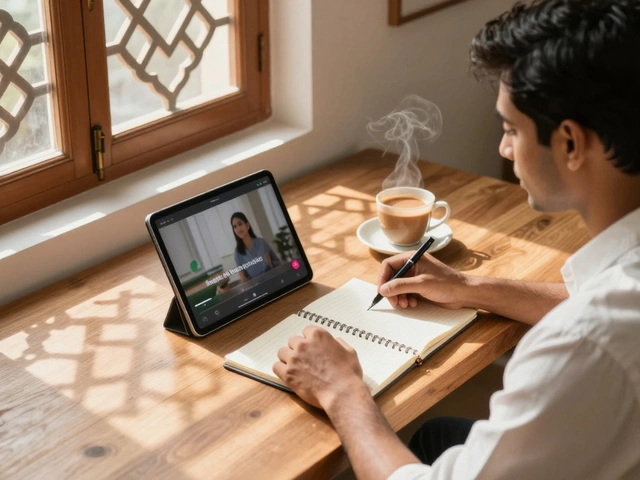
- The Shadowing Technique: This is a powerful tool used by interpreters. Listen to a native speaker (on a podcast or YouTube video) and repeat exactly what they say, simultaneously. Mimic their speed, emotion, and pauses. This trains your mouth muscles to move in ways they aren't used to, improving pronunciation and flow without conscious effort.
Immersion works because it removes the translation step. When you are forced to understand context clues to survive a conversation, your brain prioritizes comprehension over perfection. This is how babies learn, and it is how adults can relearn efficiently.
Speaking Before You Are Ready
This is the hardest part for most learners. We fear embarrassment. We worry about sounding stupid. But in language learning, embarrassment is the price of admission. The fastest way to improve your English speaking skills the ability to communicate verbally in English is to put yourself in situations where you have no choice but to speak.
You don't need a partner who is also learning. You need native speakers or highly proficient users who are willing to engage with you. Platforms like iTalki, Preply, or even local meetups in cities like Bangalore offer affordable options for conversation practice. The key is consistency. One hour of conversation once a week is useless. Twenty minutes of conversation every day is transformative.
Focus on "communicative competence" rather than grammatical precision. If you say, "I go store yesterday," everyone understands you. Correcting it to "I went to the store yesterday" is a minor tweak. Don't let the fear of using the wrong tense stop you from conveying your message. As you speak more, your brain will naturally start correcting itself through feedback loops.

Vocabulary: Quality Over Quantity
A common mistake is trying to learn obscure words like "ubiquitous" or "ephemeral" early on. These words appear rarely in daily conversation. Instead, focus on the core 1,000 to 2,000 words that make up 80% of everyday speech. This is based on the Pareto Principle (80/20 rule) applied to linguistics.
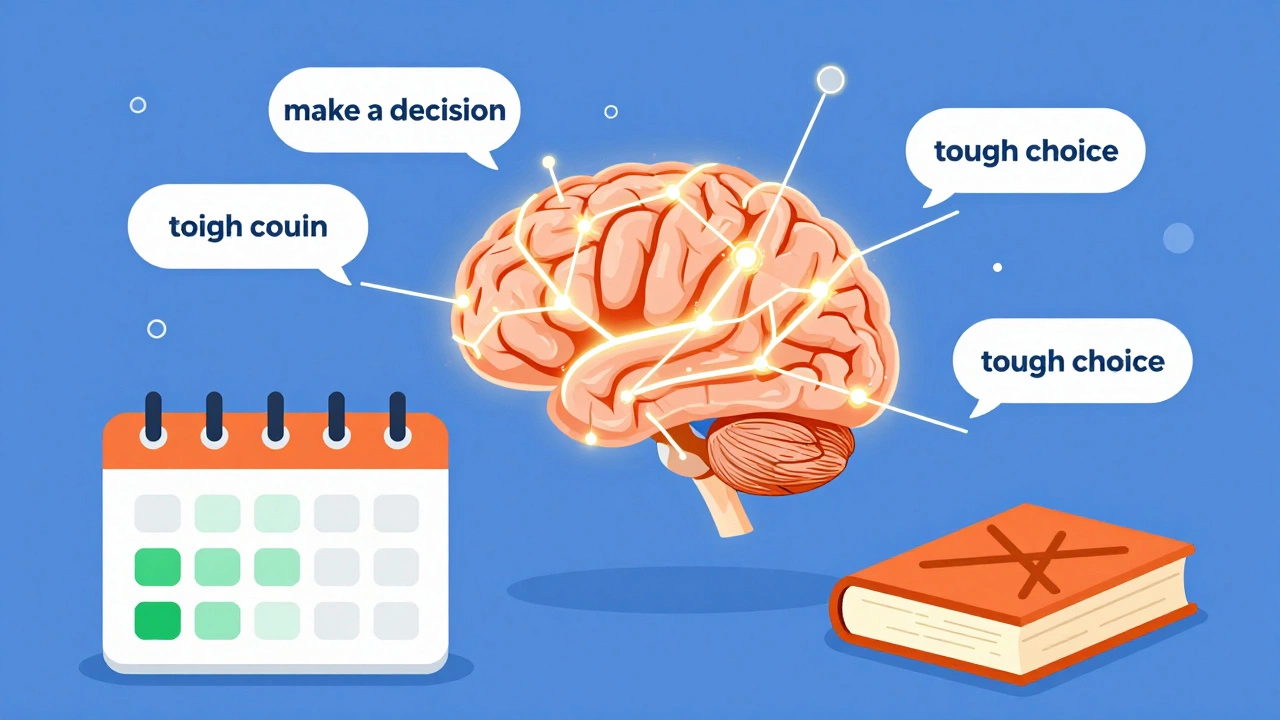
Learn words in chunks, not isolation. Don't just learn the word "decision." Learn "make a decision," "tough decision," and "final decision." This is called learning collocations. Collocations help you sound natural because they reflect how native speakers actually group words together. Using spaced repetition software (SRS) like Anki can help you retain these chunks. The algorithm shows you words right before you are likely to forget them, maximizing memory efficiency.
| Strategy | Efficiency | Best For | Pitfall |
|---|---|---|---|
| Rote Memorization | Low | Exams | Quick forgetting |
| Contextual Learning | High | Reading/Listening | Time-consuming |
| Spaced Repetition (SRS) | Very High | Long-term retention | Requires discipline |
| Collocation Focus | High | Speaking/Writing | Harder to find resources |
Leveraging Technology and AI
In 2026, technology has made language learning more accessible than ever. AI-powered tools can provide instant feedback on pronunciation and grammar. Apps like Duolingo are great for building a habit, but they lack depth. For serious learners, AI chatbots that simulate conversations are invaluable. You can practice ordering coffee, negotiating a salary, or having a casual chat without the pressure of a human listener judging you.
Use AI to generate personalized content. Ask an AI to write a short story using specific vocabulary words you are struggling with. Then read it aloud. This combines active recall with contextual usage. Additionally, voice recognition tools can analyze your accent and suggest corrections. While not perfect, they provide immediate data points for improvement.
Building a Sustainable Routine
Motivation fades; habits endure. You cannot rely on bursts of enthusiasm. You need a routine that fits into your life, not one that disrupts it. Aim for micro-sessions. Ten minutes of listening to a podcast while brushing your teeth is better than zero minutes. Fifteen minutes of shadowing during your lunch break adds up.
Track your progress not by tests, but by milestones. Can you order food confidently? Can you watch a sitcom without subtitles? Can you hold a five-minute conversation about your job? These practical markers are more meaningful than arbitrary levels like "B1" or "B2." Celebrate these small wins to keep your momentum going.
Common Pitfalls to Avoid
One major trap is perfectionism. Waiting until you are "ready" to speak ensures you will never speak. Another is relying solely on textbooks. Textbooks are static; language is dynamic. Real-world English includes slang, idioms, interruptions, and unclear audio. You need exposure to messy, real-life interactions.
Also, avoid comparing yourself to polyglots on social media. Their journey often looks easier than it is. Focus on your own baseline. Improvement is personal. If you understood 10% more today than you did yesterday, you are winning.
How long does it really take to learn English?
For a dedicated learner practicing 1-2 hours daily, conversational fluency can be achieved in 3-6 months. Full professional proficiency may take 1-2 years. The timeline depends heavily on your native language's similarity to English and the intensity of your immersion.
Is it better to learn grammar first or start speaking immediately?
Start speaking immediately. Basic grammar helps structure sentences, but excessive focus on rules hinders fluency. You can correct grammar later through feedback. Prioritize communication over accuracy in the early stages.
What are the best free resources for learning English?
YouTube channels like BBC Learning English, podcasts like "6 Minute English," and apps like Duolingo or HelloTalk are excellent free resources. Libraries also offer access to online databases and audiobooks.
Can I learn English without a tutor?
Yes, self-study is possible with discipline. However, a tutor or language exchange partner provides crucial feedback and accountability. Without external correction, you may fossilize bad habits.
How important is pronunciation in learning English?
Pronunciation is vital for being understood. While accents are acceptable, clear articulation prevents misunderstandings. Practice phonetics and shadowing to improve clarity, especially with tricky sounds like 'th' or 'r'.