Exam Difficulty Comparison Calculator
China's Gaokao
12M+ takers, top universities, life-defining
India's IIT JEE Advanced
250K qualified, 10K selected
India's UPSC Civil Services
1.1M applicants, 800-1,000 selected
Enter your score to see if you'd pass this exam
Think you’ve had a hard day studying? Try sitting for an exam where one wrong answer can change your entire future - and millions of people are doing it at the same time. These aren’t just tough tests. They’re life-defining gauntlets that filter out the vast majority of candidates, leaving only a tiny fraction to move forward. If you’ve ever wondered what real academic pressure looks like, here are the top three toughest exams in the world today.
China’s Gaokao
Every June, over 12 million high school students in China sit for the Gaokao, a four-day national exam that determines which university they can attend - and by extension, their career path. There’s no retake unless you’re willing to drop a full year. The test covers Chinese, math, foreign language, and either science or humanities, depending on your track. Scores are ranked nationwide. A few points can mean the difference between Tsinghua University and a regional college.
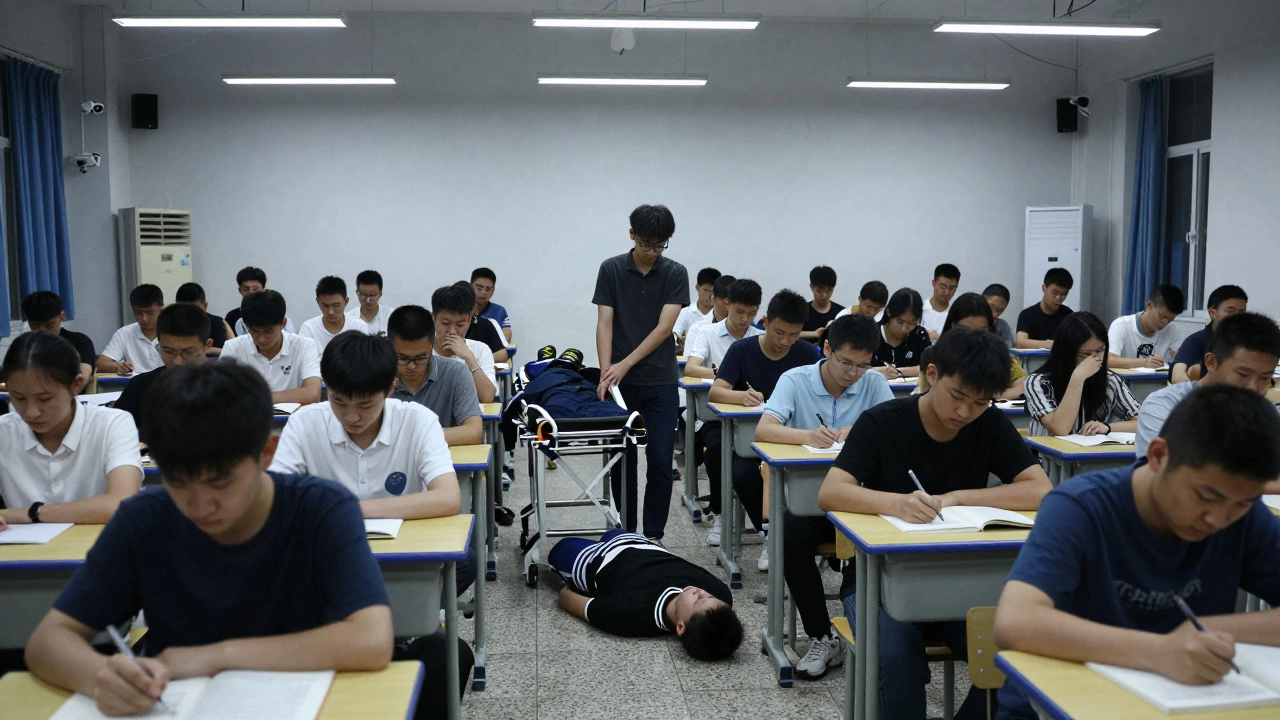
The pressure is extreme. Families often move near test centers. Some students study 14 hours a day for years. In 2023, over 1.2 million students scored below the cutoff for a top-tier university. That’s more than the entire population of many countries. And it’s not just about knowledge - it’s endurance. Students take the exam in silence, under strict surveillance, with no phones, no water bottles, and no exceptions. One student fainted in 2022 during the math section and was carried out on a stretcher - but still finished the exam the next day.
India’s IIT JEE Advanced
In India, the IIT JEE Advanced is the final gate to the Indian Institutes of Technology - the country’s most elite engineering schools. Over 250,000 students qualify for this exam each year after clearing the first round, JEE Main. Only about 10,000 make it into IITs. The acceptance rate? Less than 4%.
The exam isn’t just hard - it’s designed to break you. Questions mix concepts from physics, chemistry, and math in ways no textbook prepares you for. A single problem might require you to combine calculus, fluid dynamics, and organic reaction mechanisms in under three minutes. Coaching centers in Kota, Rajasthan, are packed with teens living in dorms, studying from 6 a.m. to midnight, six days a week. Many never see their families for months. The mental toll is real: suicide rates among JEE aspirants have risen sharply over the last decade, according to government data from Rajasthan and Bihar.
And it’s not just about getting in. Once you’re in, the pressure doesn’t stop. IITs are among the most demanding engineering schools globally. But for many families in India, getting into an IIT isn’t just an academic win - it’s a social transformation.
India’s UPSC Civil Services Exam
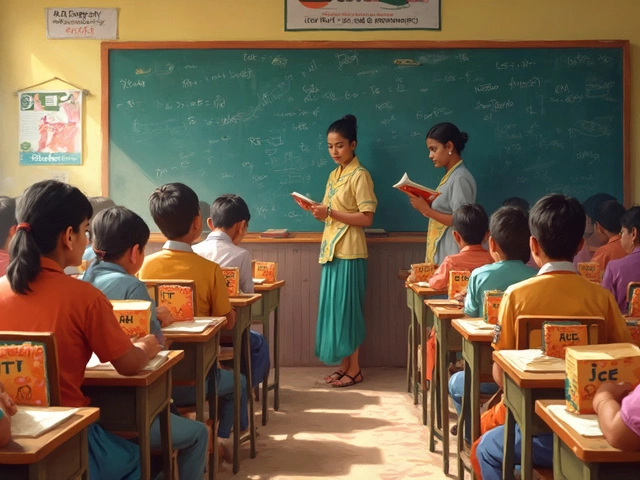
If you think engineering is tough, try becoming a government administrator in India. The UPSC Civil Services Exam is a three-stage process that takes over a year to complete. It starts with a preliminary test (objective), then a mains exam (nine written papers), and ends with a personal interview. Only about 800-1,000 candidates are selected each year out of 1.1 million applicants. That’s a success rate of less than 0.1%.
The syllabus? Everything. History, geography, economics, law, ethics, current affairs, public administration, international relations - and you need to write detailed, analytical answers in English or Hindi. The mains exam alone lasts nine days. Candidates spend 12-18 months preparing, often quitting jobs or putting personal lives on hold. Many take it multiple times. One 2023 topper studied for seven years before clearing it. He was 32 when he finally made it.
What makes UPSC unique is that it doesn’t just test knowledge - it tests judgment, emotional control, and moral reasoning. The interview panel asks questions like: “How would you handle a village protest over water rights?” or “What would you do if your superior ordered you to falsify a report?” There’s no right answer. But one wrong tone can cost you the job.

Why These Three Stand Out
What sets these exams apart isn’t just their difficulty - it’s their scale, stakes, and structure.
- Scale: Gaokao has 12M+ takers. UPSC has 1.1M. IIT JEE Advanced has 250K. These aren’t niche tests - they’re national events.
- Stakes: Your score doesn’t just affect your grades - it locks in your income, social status, and even marriage prospects in some cultures.
- Structure: Unlike standardized tests like the SAT or GRE, these exams demand deep, flexible understanding, not memorization. You can’t cram your way through them.
Compare that to the SAT or GRE, which are taken by hundreds of thousands - but have acceptance rates above 50% for top schools. Those are gateways. These are sieves.
What These Exams Reveal About Society
These exams aren’t just academic challenges. They’re mirrors of the societies that created them.
China’s Gaokao reflects a system that values meritocracy above all - but also one where social mobility is tightly tied to test scores. If you don’t get into a top university, your chances of upward mobility drop sharply.
India’s IIT JEE mirrors the country’s obsession with engineering as the golden ticket out of poverty. For many families, an IIT degree is the only path to financial security.
UPSC is different. It’s a test of public service ethos. It asks not just “Can you solve this problem?” but “Will you do the right thing when no one’s watching?” That’s why it’s considered one of the most respected - and feared - exams on earth.

Is There a Way to Prepare Without Burning Out?
Yes - but it’s not easy.
Top performers don’t just study more. They study smarter. They:
- Focus on past papers - not just books. Gaokao and UPSC repeat question patterns.
- Practice timed mock tests weekly. Speed matters as much as accuracy.
- Build mental resilience. Meditation, sleep, and breaks aren’t luxuries - they’re part of the strategy.
- Join peer groups. Isolation kills motivation. Many toppers say their study circles kept them sane.
And they know one thing: the exam doesn’t define their worth. But in these systems, it sure feels like it does.
Final Thought
These three exams - Gaokao, IIT JEE Advanced, and UPSC - are the most brutal filters in modern education. They don’t just test knowledge. They test endurance, sacrifice, and willpower. And yet, millions still line up every year, hoping to be among the few who pass.
Why? Because for them, passing isn’t just about getting into a school. It’s about changing their family’s future. And that’s a pressure no test can fully measure - but one that makes these exams truly unforgettable.
Which exam has the lowest pass rate in the world?
The UPSC Civil Services Exam in India has the lowest pass rate among major national exams, at less than 0.1%. Out of over 1.1 million applicants each year, only about 800-1,000 candidates are selected. This makes it statistically harder to clear than IIT JEE Advanced or China’s Gaokao, despite the larger number of test-takers in those exams.
Is the IIT JEE harder than the Gaokao?
It depends on what you mean by "harder." Gaokao has more test-takers and higher stakes for social mobility, but IIT JEE Advanced is more conceptually intense. Gaokao tests breadth and speed across multiple subjects. IIT JEE Advanced demands deep, creative problem-solving in physics, math, and chemistry - often requiring insights beyond standard curriculum. Many who clear Gaokao still find IIT JEE questions unexpectedly complex.
Can you retake the Gaokao if you fail?
Yes, but it’s not common. Students can retake the Gaokao the following year, but they must withdraw from university admissions and spend another full year preparing. Many students who score below the cutoff for top schools choose to repeat the exam. However, retakers often face social stigma, and universities may view repeat candidates less favorably. The system is designed to discourage retakes - making each attempt feel like a one-shot deal.
Why is UPSC considered harder than IIT JEE?
UPSC is harder because it’s not just about technical knowledge. While IIT JEE tests your ability to solve physics or math problems, UPSC tests your ability to think like a policymaker. You need to write detailed essays on ethics, governance, and current affairs - and then defend your views in front of a panel of senior bureaucrats. The syllabus is vast, the evaluation is subjective, and the competition is brutal. Plus, many UPSC aspirants prepare for years while working or studying elsewhere - adding emotional and financial strain.
Are there any exams tougher than these three?
There are other extremely difficult exams - like the French École Normale Supérieure entrance, Japan’s Tokyo University entrance, or the Cambridge Mathematical Tripos. But none match the combination of scale, societal pressure, and life-altering consequences of Gaokao, IIT JEE Advanced, and UPSC. These three are unique because they’re not just academic hurdles - they’re national rituals that shape entire generations.
What Comes After These Exams?
Passing one of these exams doesn’t mean the pressure ends. At IITs, the dropout rate in the first year is around 15-20%. UPSC officers face corruption, bureaucracy, and political pressure from day one. Gaokao toppers often struggle with the transition to university life - many report feeling empty after achieving their lifelong goal.
That’s the real lesson: these exams are not the finish line. They’re the first mile of a much longer race. The toughest part isn’t the test. It’s what comes after - learning to live with the weight of expectation you’ve carried for years.