
India Coding Salary Calculator
Estimate Your Coding Salary in India
Calculate your potential salary based on your role, experience, location, and skills
Tip: Adding AWS or Kubernetes skills can increase your salary by 30-50%.
When you hear someone say they learned to code and now make six figures, it’s easy to wonder: is this real? Or is it just the hype from bootcamps and YouTube ads? The truth is, coding jobs don’t just pay well-they pay significantly better than most other entry-level careers, especially in India. But not all coding jobs are the same. Some pay like a dream. Others barely cover rent in Bangalore. So what actually determines how much you’ll earn?
What Coding Jobs Actually Pay in India (2025)
In 2025, a fresh graduate with a diploma in coding and one internship under their belt can expect to earn between ₹4.5 lakh and ₹8 lakh per year in India. That’s not bad for someone who started learning Python six months ago. But here’s where it gets interesting: if you land a job at a company like Flipkart, Paytm, or a startup backed by Sequoia, that number jumps to ₹10-15 lakh. And if you’re hired by a global firm like Google, Microsoft, or Amazon’s India office? You’re looking at ₹18-25 lakh right out of college.
Mid-level developers with 3-5 years of experience? Most make ₹18-35 lakh annually. Senior engineers with expertise in cloud systems, AI, or cybersecurity often clear ₹40-60 lakh. Some top performers at product companies hit ₹80 lakh or more, especially if they have stock options.
Let’s break it down by role:
- Frontend Developer: ₹5-12 lakh/year
- Backend Developer: ₹6-15 lakh/year
- Full Stack Developer: ₹7-18 lakh/year
- Data Scientist: ₹8-22 lakh/year
- DevOps Engineer: ₹9-25 lakh/year
- AI/ML Engineer: ₹10-30+ lakh/year
These aren’t outliers. These are average salaries reported by Naukri, LinkedIn, and Glassdoor India for 2025. The top 10% of engineers in Bangalore, Hyderabad, and Pune are making over ₹50 lakh-without being managers.
Why Do Coding Jobs Pay So Much?
It’s not because coders are magically smarter. It’s because demand far outstrips supply. India produces over 1.5 million engineering graduates every year. But only about 20% of them can actually build a working app or fix a broken API. Companies don’t need people who passed exams. They need people who can ship code, solve real problems, and keep systems running.
There’s also a global angle. Many Indian developers work for U.S. and European companies on remote contracts. These roles often pay in dollars. A backend engineer working for a startup in San Francisco might earn $4,000-$6,000/month-even if they’re sitting in a co-living space in Indore. Converted to INR, that’s ₹3.5-5.5 lakh per month.
And let’s not forget automation. As more businesses move online, they need people to build and maintain their digital tools. Banks, hospitals, schools, even vegetable vendors now need apps. That’s not going away. It’s growing. And every new app needs developers.
What Skills Actually Get You Paid More?
Knowing HTML and CSS won’t make you rich. You need depth. The highest-paid coders don’t just write code-they understand systems.
Here’s what employers are paying premiums for in 2025:
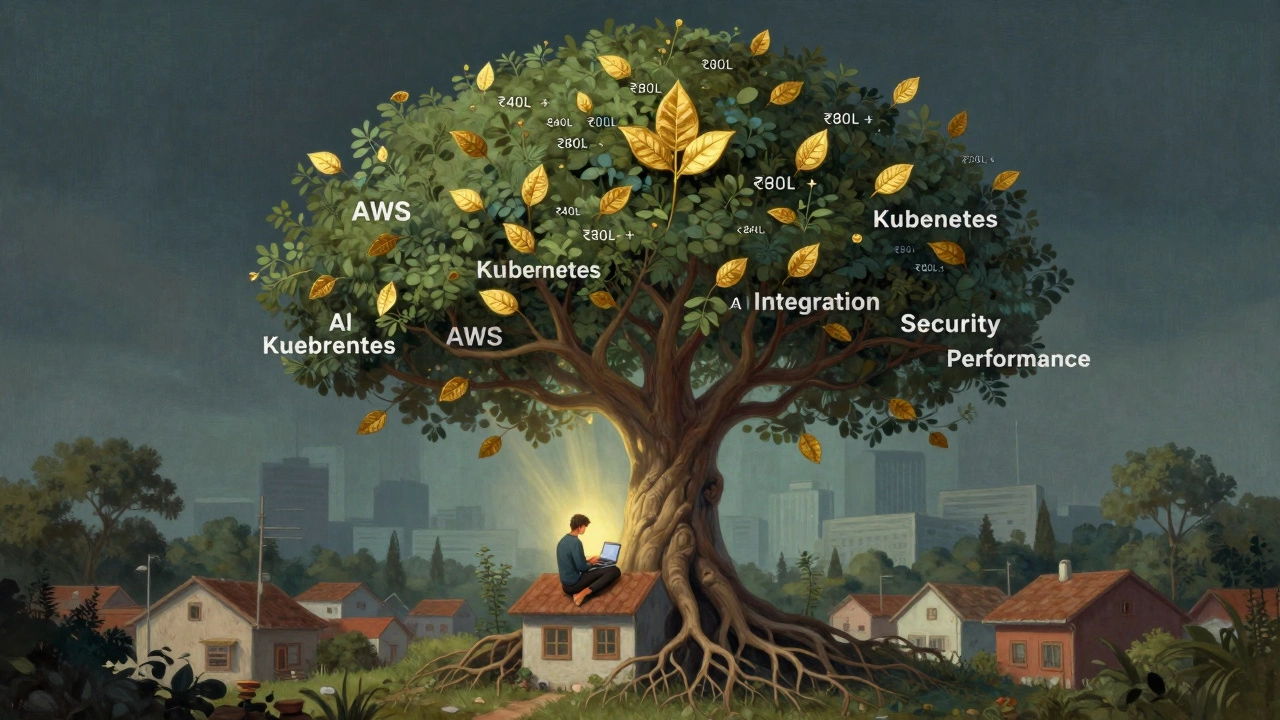
- Cloud platforms (AWS, Azure, Google Cloud): Developers with AWS certification earn 30-50% more than those without.
- Containerization (Docker, Kubernetes): If you can deploy an app without breaking it, you’re in high demand.
- AI integration: Knowing how to use LLMs like GPT-4 or Claude to automate tasks makes you valuable even if you’re not an AI researcher.
- Performance optimization: Speed matters. If your app loads in 1 second instead of 5, you’re saving the company money. That’s worth a bonus.
- Security: A single data leak can cost millions. Companies pay extra for developers who think about security from day one.
One developer I know in Pune learned Kubernetes on YouTube, built a small CI/CD pipeline for his freelance clients, and got hired by a fintech startup for ₹22 lakh/year. He didn’t go to IIT. He didn’t have a degree in computer science. He just solved a real problem better than others.

Where Are the Best Paying Coding Jobs in India?
Location matters-but not as much as you think. Bangalore still leads, but the gap is closing.
- Bangalore: Highest salaries, but also highest cost of living. ₹18-25 lakh is common for mid-level roles.
- Hyderabad: Growing fast. Lower rent. Companies like Microsoft and TCS pay nearly as much as Bangalore, with better work-life balance.
- Pune: Strong startup scene. Many remote-first companies hire here because talent is cheaper than in Bengaluru.
- Chennai and Delhi-NCR: Solid pay, especially in banking and government tech projects.
- Remote jobs: The biggest game-changer. You can work for a U.S. company while living in Jaipur or Bhopal. Salaries in USD mean your buying power skyrockets.
One developer from a small town in Madhya Pradesh now works full-time for a London-based SaaS company. He earns £3,000/month. After taxes and rent, he saves more than most engineers in Bangalore. He never moved. He just learned how to interview well and build a strong portfolio.
What’s Holding People Back From High Pay?
Not everyone earns well. Many coders stay stuck at ₹4-6 lakh/year. Why?
- They only learn syntax: They can write a for-loop but don’t know how to test it, debug it, or deploy it.
- No portfolio: They have certificates, not projects. Employers care more about what you’ve built than what you’ve studied.
- They avoid communication: Coding isn’t just writing code. It’s explaining it, documenting it, and collaborating. Many get rejected in interviews because they can’t talk about their own work.
- They wait for the "perfect" job: They turn down ₹6 lakh offers hoping for ₹15 lakh. By the time they get that offer, they’ve lost two years of experience.
One student from a Tier-3 college in Odisha got a ₹5 lakh offer after his third interview. He took it. Within a year, he built a tool that automated his company’s invoice processing. He got promoted. Two years later, he’s at ₹16 lakh. He didn’t wait. He started.
Is Coding Still Worth It in 2025?
Yes-but only if you treat it like a craft, not a shortcut.
If you think coding is just about memorizing JavaScript functions or passing a coding test, you’ll end up in a low-paying job. But if you treat it like building a house-you learn the tools, you practice daily, you fix what breaks, you learn from others-you’ll get paid well.
The barrier to entry is lower than ever. Free resources like freeCodeCamp, YouTube tutorials, and GitHub repos mean anyone can start. But the barrier to excellence? That’s still high. And that’s where the money is.
Companies aren’t hiring because they feel sorry for coders. They’re hiring because they need people who can solve problems faster, cheaper, and better than anyone else. If you can do that, you’ll always be paid well.
What If You’re Starting Late?
You’re 28. You’ve worked in sales for five years. You think it’s too late. It’s not.
I know a 32-year-old ex-bank employee from Coimbatore who started learning Python in 2023. He spent six months building small automation scripts for his old company. He got noticed. He got hired as a junior developer. Two years later, he’s making ₹14 lakh/year. He didn’t go to college for it. He didn’t need a degree. He just built something useful.
Age doesn’t matter. Experience in other fields can help. If you’ve worked in retail, you understand customer needs. That’s gold when you’re building apps. If you’ve managed teams, you know how to communicate. That’s worth more than a perfect algorithm.
Do coding jobs pay more than engineering jobs in India?
Yes, generally. A mechanical or civil engineer starting out in India typically earns ₹3-5 lakh/year. A software developer with the same level of education earns ₹5-10 lakh/year. The gap widens with experience. Senior software engineers often earn double or triple what senior engineers in traditional fields make. The reason? Software scales. A single app can serve millions. A bridge serves thousands. Companies pay more for scalable impact.
Can I get a high-paying coding job without a degree?
Absolutely. Many top tech companies in India, including Flipkart, Zomato, and Razorpay, hire based on skills, not degrees. Your GitHub profile, portfolio projects, and problem-solving ability matter more than your college name. Bootcamp graduates with strong portfolios regularly out-earn IIT graduates with no real projects. The key is showing, not telling.
How long does it take to land a well-paying coding job?
If you study 4-6 hours a day, practice building real projects, and apply consistently, you can land your first job in 6-9 months. Getting to ₹10+ lakh/year usually takes 2-3 years of steady growth. The fastest path isn’t about speed-it’s about depth. Focus on one stack (like React + Node.js), build three solid projects, learn to explain them, and you’ll be ahead of 80% of applicants.
Are coding jobs stable in India?
More stable than most. While startups do lay off during downturns, the overall demand for tech talent remains high. Even in 2023-2024, when layoffs hit big tech globally, Indian companies still hired for cloud, security, and AI roles. The difference? Companies now hire for skills that solve real business problems-not just for coding tests. If you focus on outcomes, not just code, your job is secure.
What’s the biggest mistake beginners make?
They chase languages instead of problems. Learning Python, then Java, then JavaScript, then Rust-it’s exhausting and useless. Pick one language, build something useful with it, and learn how to solve problems with it. Once you can do that, switching languages is easy. The real skill isn’t knowing syntax. It’s knowing how to break down a problem and fix it.
Next Steps: How to Start Today
If you’re serious about earning well from coding, here’s what to do in the next 30 days:
- Choose one path: frontend, backend, or data. Don’t try to do all three.
- Build one project that solves a real problem-for yourself, your family, or a local shop. It doesn’t have to be fancy. Just functional.
- Put it on GitHub. Write a clear README explaining what it does and how to use it.
- Apply to 5 entry-level jobs every week. Even if you feel unready.
- Learn to explain your code out loud. Record yourself talking about your project. Watch it. Improve.
Money follows skill. Skill follows action. Start small. Stay consistent. The pay will come.