Coding Difficulty & Resilience Estimator
Assess Your Coding Journey Readiness
Rate yourself on these key factors that determine the hardest parts of learning to code.
Personalized Challenges & Strategies
Recommended Next Step
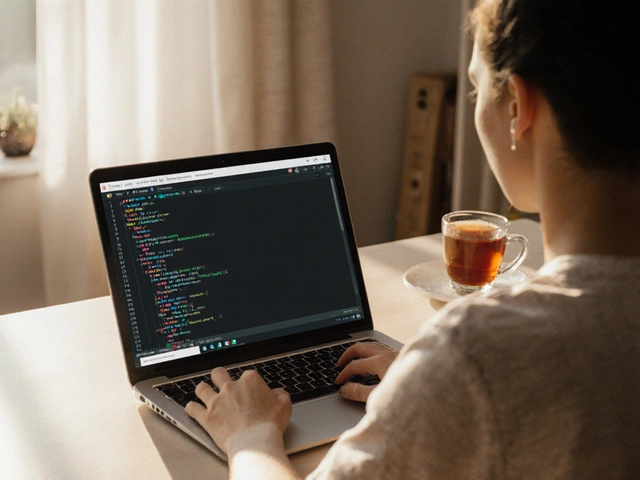
You sit down at your computer, ready to build that amazing app you’ve been dreaming about. You type out the first few lines of code, hit run, and... nothing happens. Or worse, a wall of red error messages appears on your screen. This moment-where expectation crashes into reality-is where most beginners quit. If you are asking what is the hardest thing about coding, you are not alone. It is the question every student in a coding class eventually whispers to themselves late at night.
The truth is, the difficulty isn't usually the syntax. It isn't remembering whether to use curly braces or indentation. The real struggle lies deeper. It involves shifting how your brain processes problems, managing frustration, and learning to think like a machine while remaining human enough to design for people. Let’s break down exactly what makes coding so tough and how you can get past it.
The Myth of Syntax vs. The Reality of Logic
Many people believe the hardest part of coding is memorizing commands. They worry they won’t remember the exact function name to sort an array or calculate a sum. But here is the secret: no professional developer memorizes everything. We all look things up. Even senior engineers with twenty years of experience copy-paste code snippets from documentation daily.
The actual hurdle is Computational Thinking. This is the ability to break a massive, vague problem into tiny, logical steps that a computer can execute. Computers are incredibly fast but stupidly literal. If you tell them to "make me a sandwich," they will stand there waiting for you to define what a sandwich is, where the bread is, and how to hold the knife.
When you start coding classes, you quickly realize that translating your human intent into rigid logic is exhausting. You have to anticipate every possible scenario. What if the user types letters instead of numbers? What if the internet disconnects halfway through loading data? This mental load-holding multiple variables and conditions in your head simultaneously-is cognitively demanding. It is like trying to juggle five balls while solving a math equation.
The Emotional Rollercoaster of Debugging
If logical thinking is the muscle you need to build, debugging is the workout that leaves you sore. In many ways, Debugging is the hardest part of coding because it attacks your ego. When code fails, it feels personal. You stare at fifty lines of text, knowing one single character-a missing semicolon, a misplaced parenthesis, or a typo in a variable name-is causing the entire system to crash.
This process requires a specific type of patience that few people possess naturally. You have to adopt a scientific method approach: form a hypothesis, test it, observe the result, and repeat. Often, the bug isn't where you think it is. It might be in a file you edited three days ago, or it could be caused by a library update you didn't notice. The frustration comes from the lack of immediate feedback. Unlike writing an essay, where you can see your progress linearly, coding often feels like walking in circles until suddenly, the door opens.
Beginners often fall into the trap of "panic editing." They change random parts of the code hoping something will fix the issue. This rarely works and usually creates more bugs. Learning to slow down, read the error message carefully (yes, even the scary red ones), and isolate the problem is a skill that takes months to develop.
Imposter Syndrome and the Infinite Knowledge Gap
Have you ever felt like everyone else understands coding except you? That feeling has a name: Imposter Syndrome. It is rampant in the tech industry. Because technology changes so rapidly, there is always something new to learn. A framework that was popular last year might be obsolete today. A new programming language emerges every few months.
In coding classes, this manifests as comparison anxiety. You see a classmate solve a problem in ten minutes while you spend two hours stuck on the same task. You assume they are smarter than you. In reality, they might just have prior exposure to similar concepts, or they got lucky with their initial guess. Coding is not a measure of intelligence; it is a measure of persistence and pattern recognition.
The hardest psychological barrier is accepting that you will feel stupid for a long time. Every expert was once a beginner who couldn't figure out why their loop wasn't terminating. The knowledge gap feels infinite because the field is vast. However, you don't need to know everything. You only need to know how to find the answers. Shifting your mindset from "I need to know this" to "I need to figure out how to learn this" is crucial for survival.
The Abstraction Barrier
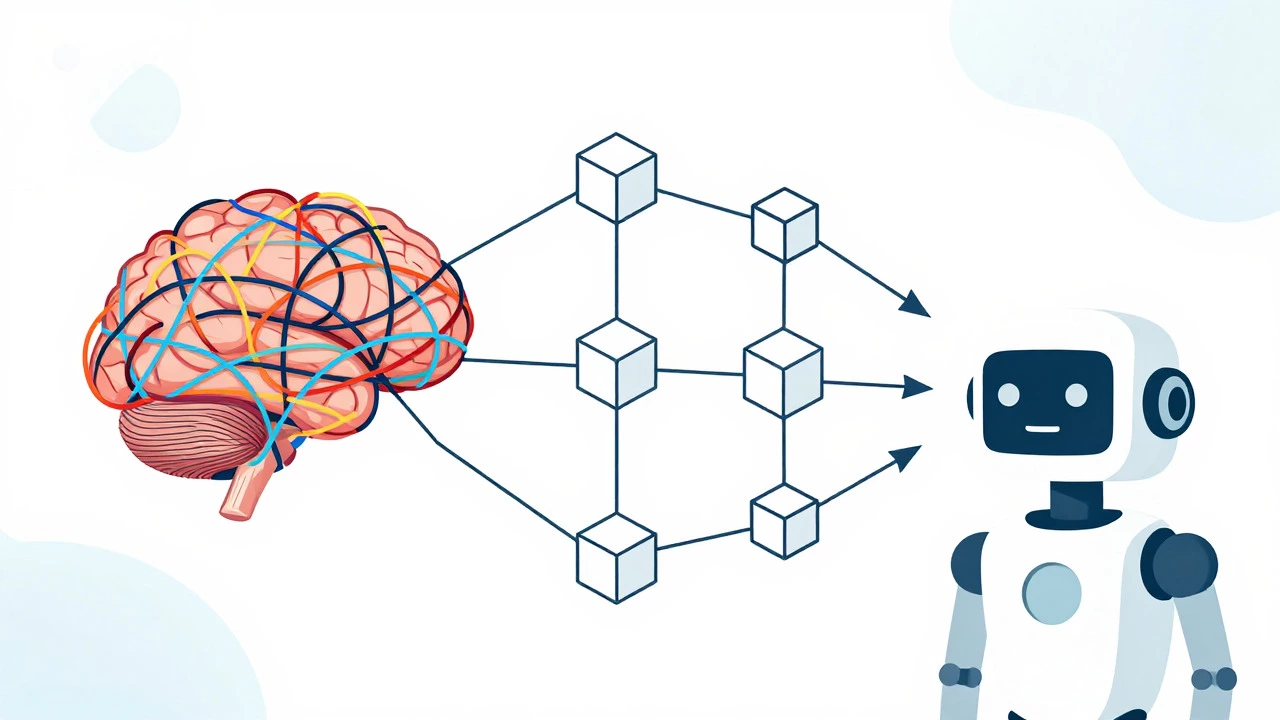
As you progress from basic scripts to building full applications, you encounter Abstraction. This is when you stop dealing with simple calculations and start working with complex systems. You might use a database, a cloud server, and a frontend framework all at once. Each layer hides complexity to make life easier, but when something breaks, you have to peel back those layers to see what’s wrong.
Imagine trying to fix a car engine without understanding how fuel injection works. That is what debugging an abstracted system feels like. You call a function, and it returns an error. But that function calls another function, which interacts with an API, which talks to a database. Tracing this chain of events requires a deep understanding of how different technologies connect. This is why many coding curricula introduce concepts like Data Structures and Algorithms early on. They teach you how data moves and transforms, giving you the map you need to navigate these abstract landscapes.
| The Challenge | What People Think It Is | What It Actually Is |
|---|---|---|
| Memorization | Remembering all syntax rules | Understanding logic patterns |
| Intelligence | Being a math genius | Persistence and curiosity |
| Speed | Typing code quickly | Thinking clearly before typing |
| Solitude | Working alone in silence | Collaborating and reading others' code |
Why Coding Classes Change the Game
Trying to learn coding in isolation amplifies all the difficulties mentioned above. Without guidance, you don't know if you are stuck because the concept is hard or because you made a silly mistake. This is where structured Coding Education becomes invaluable. A good coding class provides more than just lectures; it offers a safety net.
In a classroom setting, you get immediate feedback. An instructor can spot a logical flaw in your approach before you waste hours implementing it. More importantly, you are surrounded by peers facing the same struggles. Hearing someone else say, "I also didn't understand loops for a week," normalizes the difficulty. It reduces the shame associated with not knowing.
Furthermore, coding classes often provide curated projects. Instead of staring at a blank screen wondering what to build, you are given a clear goal with defined constraints. This scaffolding helps you focus on the logic rather than the project management aspect. As you complete these small wins, your confidence grows, and the "hardest" parts begin to feel manageable.

Practical Strategies to Overcome the Hard Parts
So, how do you tackle these challenges? Here are some actionable strategies that seasoned developers swear by:
- Rubber Duck Debugging: Explain your code line-by-line to an inanimate object (or a patient friend). Often, the act of verbalizing the logic reveals the error. You might say, "This loop should run five times," and then realize you set the counter to zero incorrectly.
- Break It Down: Never try to write a whole program at once. Write one function. Test it. Make sure it works. Then write the next one. Small, verifiable steps reduce cognitive overload.
- Embrace the Error: Stop fearing error messages. Read them. They usually tell you exactly what went wrong and where. Learn to love the traceback; it is your GPS in the dark.
- Take Breaks: Your brain needs downtime to consolidate learning. If you are stuck for more than thirty minutes, step away. Go for a walk, drink water, or sleep on it. The solution often pops into your head when you aren't actively looking for it.
- Join a Community: Whether it's a local meetup in Bangalore or an online forum, connecting with other learners keeps you motivated. Sharing struggles makes them lighter.
Conclusion: It Gets Easier, But Not Easy
The hardest thing about coding is not a technical skill. It is the mental shift required to think logically, the emotional resilience to handle failure, and the humility to keep learning. It is frustrating, confusing, and often lonely. But it is also incredibly rewarding. There is a unique joy in watching your creation come to life, pixel by pixel, function by function.
If you are considering coding classes, go for it. But go in with the right expectations. Expect to struggle. Expect to feel lost. And expect that with time, practice, and the right support, those steep hills will become gentle slopes. The code will start to make sense. The errors will become clues rather than roadblocks. And soon, you won't be asking what the hardest part is-you'll be too busy building the next big thing.
Is coding harder than mathematics?
Not necessarily. While coding uses mathematical logic, it doesn't require advanced calculus or algebra for most entry-level jobs. Coding is more about problem-solving and structure. Math is abstract; coding is concrete. If you can follow a recipe or assemble furniture, you have the logical foundation for coding.
How long does it take to get past the hardest part of coding?
For most people, the initial shock wears off after 3 to 6 months of consistent practice. During this time, you build your "mental model" of how computers work. After six months, debugging becomes less frustrating because you recognize common patterns. It never gets completely easy, but it gets predictable.
Do I need to be smart to learn coding?
No. Intelligence is not the primary predictor of success in coding. Persistence, curiosity, and the ability to research are far more important. Many successful developers struggled in school but excelled in coding because they enjoyed the trial-and-error process.
What is the best way to deal with coding frustration?
Step away from the screen. Physical movement helps reset your brain. Also, try "Rubber Duck Debugging" by explaining your problem out loud. Finally, remember that every developer, no matter how senior, faces frustration daily. It is part of the job, not a sign of failure.
Are coding classes worth it if I can learn online for free?
Free resources are great, but they lack structure and accountability. Coding classes provide a curriculum that prevents gaps in your knowledge. They also offer mentorship and peer support, which significantly reduces the feeling of isolation and imposter syndrome. If you struggle with self-discipline, classes are highly recommended.