Coding Timeline Calculator
Set Your Goals
Choose what you want to achieve and how much time you can commit daily.
Set your goals and daily commitment to see your personalized timeline.
How long does it take to learn coding? It’s not a one-size-fits-all answer. Some people pick up their first working program in a week. Others spend months just getting past the syntax. The truth? It depends on what you want to do with it.
What Does "Learn Coding" Even Mean?
Most people think learning to code means becoming a software engineer. But that’s not the only goal. Maybe you want to build a personal website. Or automate your spreadsheets. Or fix a broken plugin on your Shopify store. Each goal has a different timeline.
If you’re aiming to write a simple script that renames 100 files automatically, you might get there in 10 hours. If you want to build a full mobile app with user logins and a backend, that’s a different story. You need to understand not just one language, but how systems talk to each other.
Start by asking: What am I trying to build? That’s the real clock starter.
Learning the Basics: 2 to 8 Weeks
For most beginners, the first hurdle is syntax. Variables, loops, conditionals, functions. These are the ABCs of coding. With daily practice-30 to 60 minutes a day-you can lock these in within a month.
Take Python. It’s one of the most beginner-friendly languages. You can write a program that adds two numbers on day one. By week three, you’re building a calculator that asks for user input. By week five, you’ve made a to-do list app that saves items to a file.
Same goes for JavaScript if you’re targeting websites. You learn how to change text on a page, then make buttons work, then fetch data from an API. It’s not magic. It’s muscle memory.
But here’s the trap: many people stop here. They think they "learned to code" because they can write a loop. That’s like saying you can drive because you know how to turn the key.
Building Real Projects: 3 to 6 Months
Real learning starts when you stop following tutorials and start building your own stuff. This is where most people quit-not because it’s too hard, but because they don’t know what to build next.
Here’s what works:
- Build a personal portfolio site (even if it’s just three pages)
- Create a weather app that shows your city’s forecast
- Make a budget tracker that imports your bank CSV and graphs spending
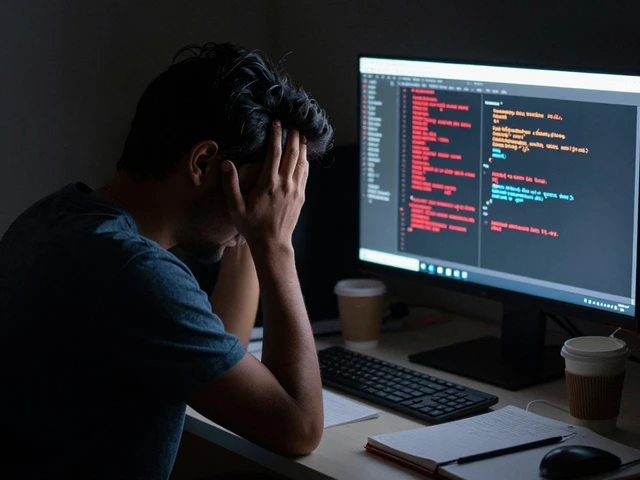
These aren’t fancy apps. But they force you to solve real problems: handling user input, connecting to APIs, debugging errors, organizing files. You’ll hit walls. You’ll Google the same error 12 times. That’s normal.
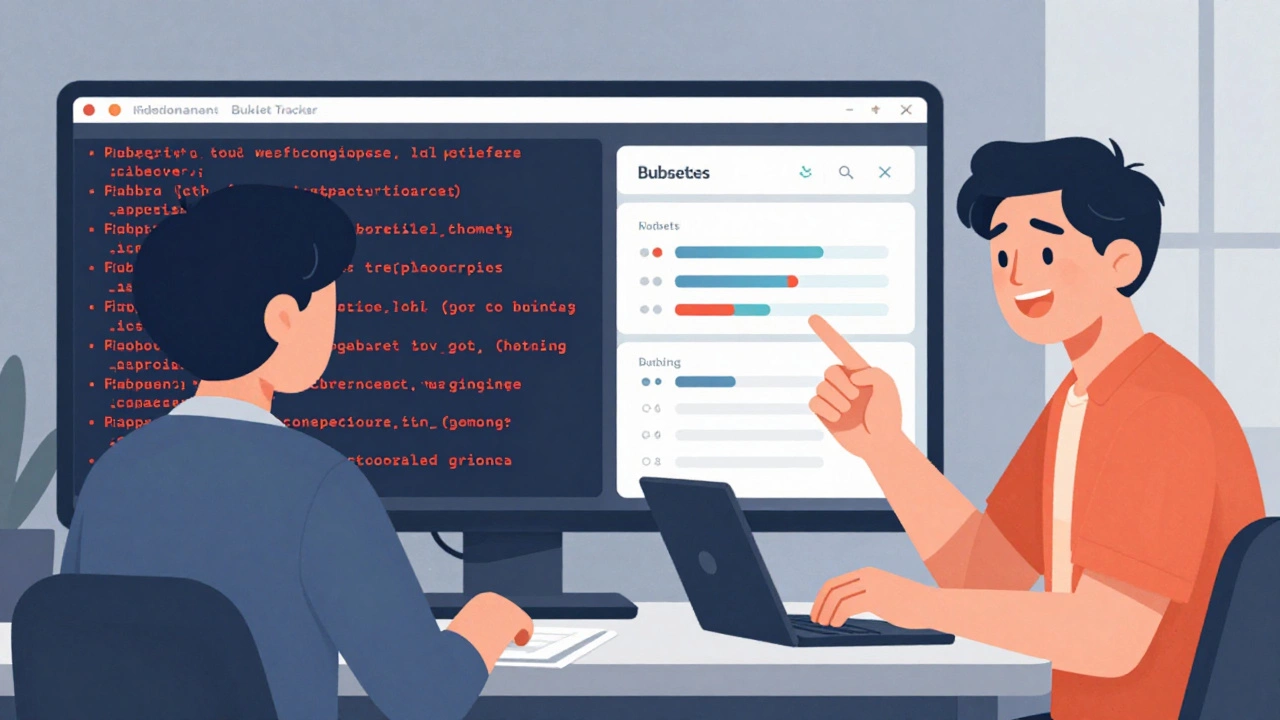
After three months of this, you’ll start recognizing patterns. You’ll know which error messages mean a missing semicolon versus a broken API key. You’ll stop feeling lost every time you see a new library.
By six months, you’ve probably built five to ten small projects. You’ve pushed code to GitHub. You’ve read documentation that didn’t make sense at first-and figured it out anyway. That’s when you’re no longer a beginner. You’re a builder.
Getting Job-Ready: 6 to 12 Months
If your goal is a job, you need more than projects. You need structure. You need to understand how code scales, how teams work, how to write clean, maintainable code.
At this stage, you’ll start learning:
- Version control with Git and GitHub
- How to write tests for your code
- Basic data structures (arrays, objects, stacks)
- How APIs work-REST, JSON, authentication
- One framework like React, Django, or Node.js
Most entry-level coding jobs in India (like junior developer roles in Chennai or Bangalore) expect you to know at least one full stack: front-end + back-end. That’s not something you pick up in a weekend course.
Think of it like learning to cook. You can make scrambled eggs in 10 minutes. But to run a kitchen? You need months of practice, feedback, and repetition.
People who land jobs in under six months usually have one thing in common: they built something people could use. Not a clone of Twitter. But a tool that solved a real problem for their friends, family, or local shop.
What Slows People Down?
It’s not intelligence. It’s not age. It’s not which language you pick first.
The biggest roadblocks are:
- Switching languages too often - Jumping from Python to JavaScript to Java every week. Stick to one until you can build something real.
- Waiting for perfection - You don’t need to know everything before you start. Build something ugly. Then make it better.
- Not debugging effectively - Most of coding is reading error messages and asking Google the right questions. Learn to read the red text. It’s your best teacher.
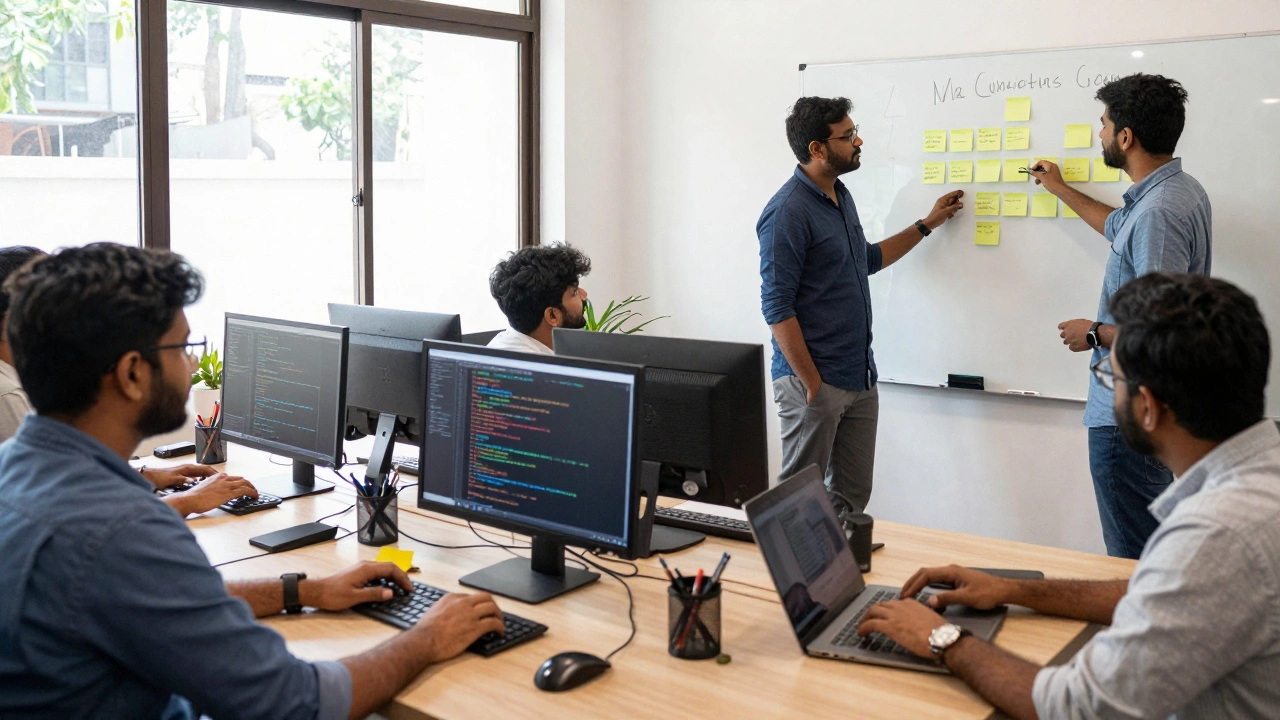
- Learning in isolation - Join a local coding group, even online. Talk to others. Ask for help. You’ll learn faster.
One student I know from Chennai spent six months stuck because he kept copying tutorials without changing anything. Then he built a simple app to track his monthly expenses. He didn’t know how to save data to a file. He didn’t know how to format dates. He learned all of it while fixing his own app. That’s when the light turned on.
Can You Learn Coding in 30 Days?
Yes-but only if you redefine "learn."
You can learn enough to write a basic script, automate a task, or understand how a website works in 30 days. But you won’t be job-ready. You won’t be able to build a complex app. And you won’t know how to debug when things break.
Those 30-day "bootcamps"? They’re good for motivation. But they’re like a driving simulator. You’ll know how to steer. But you won’t know how to handle rain, traffic, or a flat tire.
If you’re serious, treat coding like a language. You don’t become fluent in Spanish in a month. You practice daily. You make mistakes. You get corrected. You keep going.
How to Stay Consistent
Consistency beats intensity. Five days a week, 30 minutes, is better than one 8-hour marathon that leaves you burnt out.
Here’s a simple routine:
- Monday: Learn one new concept (e.g., functions)
- Tuesday: Build something small using it
- Wednesday: Break it on purpose. Fix it.
- Thursday: Read someone else’s code on GitHub
- Friday: Share what you built with a friend or online group
Weekends? Rest. Or explore. Watch a YouTube video about how a website works. Read a blog post. Just stay curious.
What Comes After You "Learn"?
Learning to code isn’t a finish line. It’s the first step.
Once you can build things, you’ll realize there’s always something new: new frameworks, new tools, new ways to solve old problems. The best coders aren’t the ones who know the most-they’re the ones who aren’t afraid to ask, "How does this work?"
After your first job, you’ll learn how to write code that other people can read. How to work with designers. How to estimate how long a task will take. How to say "no" when the scope grows too big.
That’s the real skill. Not writing perfect code. Writing code that helps people.
Can I learn coding without a degree?
Absolutely. Most entry-level coding jobs in India don’t require a computer science degree. Employers care more about what you can build than what’s on your diploma. A strong GitHub profile with real projects often beats a degree.
Which programming language should I start with?
Start with Python if you want to automate tasks, analyze data, or build backends. Start with JavaScript if you want to make websites interactive. Both are beginner-friendly and widely used. Don’t overthink it-pick one and stick with it for at least three months.
Is coding hard for people over 30?
No. Age doesn’t matter. What matters is persistence. Many people in their 40s and 50s switch to coding successfully. They bring life experience, problem-solving skills, and patience-traits that make them better coders than younger beginners who quit when things get tough.
Do I need to be good at math to code?
Not really. Basic arithmetic is enough for 90% of coding jobs. You don’t need calculus or advanced algebra. Logic matters more than math. If you can follow a recipe step by step, you can learn to code.
How much time should I spend coding each day?
Start with 30 minutes a day, five days a week. That’s 2.5 hours total. More than that early on leads to burnout. Consistency matters more than hours. Even 15 minutes daily adds up to over 90 hours in a year-enough to build your first real app.