Learning Style Matcher
Not sure which learning path is right for you? Answer 5 quick questions based on the key factors mentioned in the article to find your ideal match.
Key Takeaways
- Classroom learning excels in social development and immediate feedback.
- eLearning wins on flexibility, cost, and personalized pacing.
- The 'best' choice depends on the subject matter and the learner's discipline.
- Hybrid models often provide the strongest results by combining both worlds.
The Human Element of Traditional Classrooms
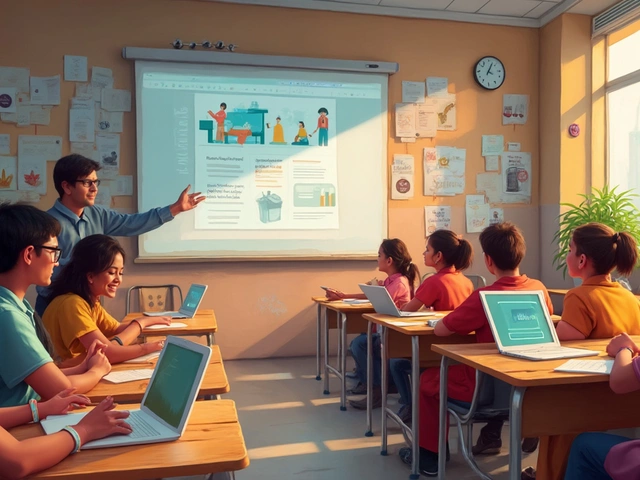
When we talk about classroom learning is a traditional educational model where students and teachers interact in a physical space at a scheduled time , we're talking about more than just textbooks. It's about the energy in the room. In a physical setting, a teacher can see the exact moment a student's face goes blank and pivot their explanation instantly. This real-time emotional intelligence is something software still struggles to replicate.
Think about a chemistry lab. You can watch a thousand videos of a titration experiment, but you won't truly understand the tension of adding a single drop of base until you're holding the burette yourself. The tactile experience and the immediate correction from a professor prevent mistakes that could take hours to troubleshoot online. Plus, the social friction of a classroom-debating a peer or collaborating on a group project-builds soft skills that are critical for any career.
The Digital Shift: How eLearning Changed the Game
On the flip side, eLearning is a learning delivery method that uses electronic technologies to provide a student-centered learning experience . It isn't just a digitized version of a textbook; it's a complete architectural shift in how knowledge is consumed. The most jarring difference is the removal of the "average pace." In a physical classroom, the teacher usually teaches to the middle. If you're faster, you're bored; if you're slower, you're lost.
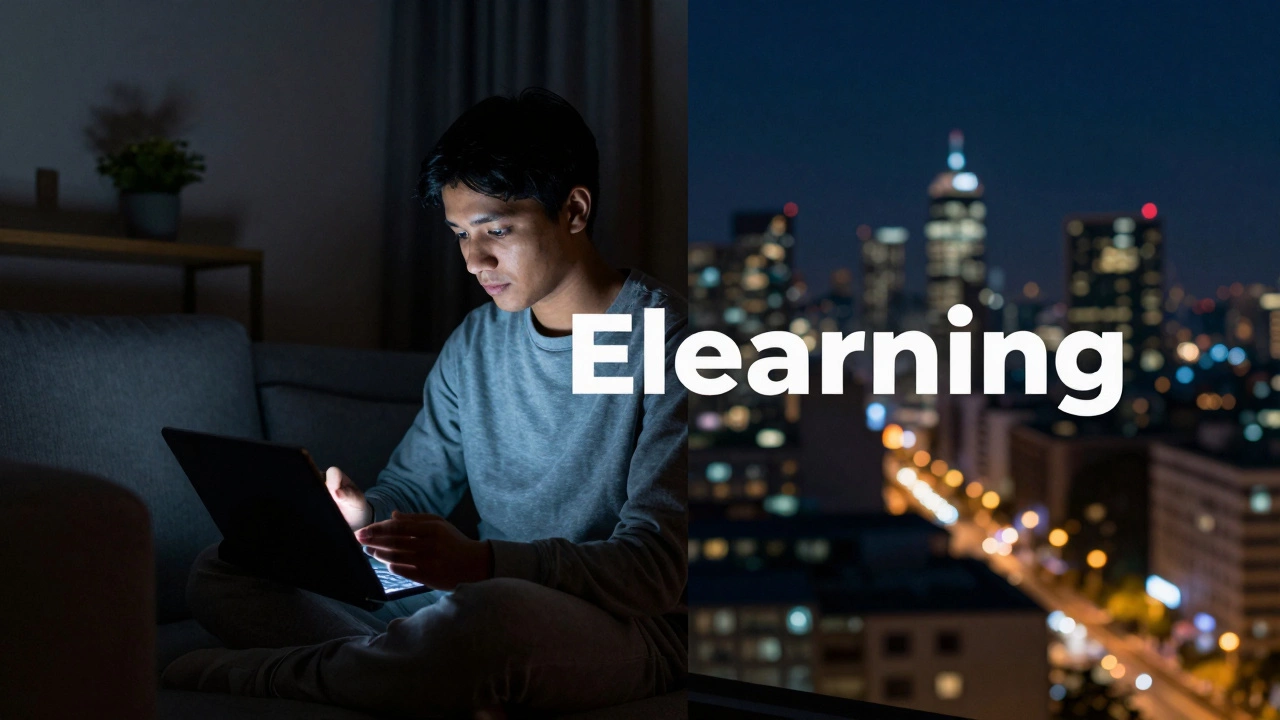
With an LMS (Learning Management System) like Moodle or Canvas, you control the clock. You can rewind a difficult concept five times or skip the parts you already know. This asynchronous nature is a lifesaver for working professionals. If you're balancing a full-time job in a city like Bangalore, you can't always commute to a center at 6 PM. You can, however, take a module at 11 PM when the house is quiet.
Breaking Down the Core Differences
To really see where these two diverge, we have to look at the logistics and the psychology of learning. The differences usually fall into four main buckets: accessibility, social interaction, cost, and discipline.
| Feature | Classroom Learning | eLearning |
|---|---|---|
| Flexibility | Fixed schedule/location | On-demand/Anywhere |
| Social Interaction | High (Face-to-face) | Moderate (Forums/Chat) |
| Pacing | Instructor-led | Self-paced |
| Cost | Higher (Rent, Travel, Facilities) | Lower (Scalable content) |
| Feedback | Instant and nuanced | Often delayed or automated |
The Discipline Gap: Why Some People Fail Online
Here is the uncomfortable truth: classroom learning provides an external structure that many people actually need to succeed. The physical act of showing up, the gaze of the teacher, and the peer pressure of a quiet room create a psychological "container" for focus. When you move to eLearning, that container vanishes.
Online learners must possess high levels of intrinsic motivation. It is incredibly easy to open a course tab and then spend two hours scrolling through social media. This is why completion rates for Massive Open Online Courses (MOOCs) are notoriously low-often under 10%. The lack of accountability is the biggest hurdle. In a classroom, if you don't show up, the teacher calls your parents or marks you absent. Online, the only person you're letting down is yourself.
Where the Magic Happens: Blended and Hybrid Learning
We don't have to choose just one. The most effective modern approach is Blended Learning, which combines the best of both worlds. This usually looks like a "flipped classroom." Students watch instructional videos and read theory at home (the eLearning part), and then come to the physical classroom for workshops, debates, and hands-on problem solving.
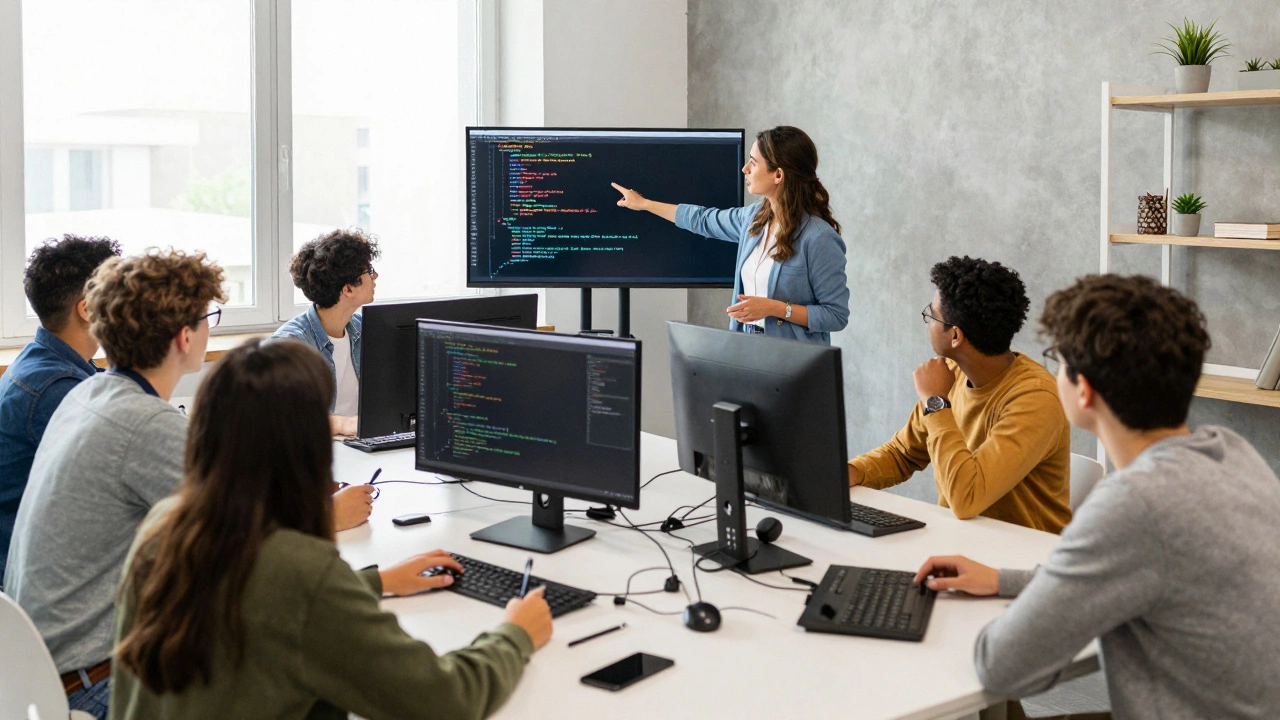
This model optimizes the teacher's time. Instead of spending 40 minutes lecturing to a room where half the students are daydreaming, the teacher spends that time acting as a coach. For example, a coding bootcamp might provide the syntax lessons via online modules but hold a 4-hour weekly "sprint" in person to help students debug complex projects. This ensures that the cognitive load of basic memorization is handled digitally, while the high-level synthesis happens socially.
Choosing the Right Path for Your Goal
If you're still undecided, ask yourself what the "end product" of your learning needs to be. Some skills are fundamentally social or physical. You can't learn public speaking or surgery entirely through a screen. These require the immediate, high-stakes feedback and physical presence of a mentor.
However, if you're learning a technical skill-like data analysis, a new language, or digital marketing-eLearning is often superior. You can access the world's best experts via a Virtual Classroom without leaving your zip code. The ability to use tools like screen-sharing and collaborative docs in real-time often makes online technical training more efficient than a whiteboard lecture.
Is eLearning as recognized as a degree from a physical university?
It depends on the accreditation. Degrees from established universities delivered online are generally viewed the same as on-campus degrees. However, a certificate from a random online platform may not carry the same weight as a formal degree unless the skills are proven in a portfolio or technical interview.
Can children learn effectively through eLearning?
Young children usually struggle with pure eLearning because they require social-emotional development and tactile stimulation. For K-5 students, a hybrid approach is best, where digital tools supplement but do not replace the physical classroom and peer interaction.
Which method is more expensive in the long run?
Classroom learning is almost always more expensive due to overhead costs like building maintenance, electricity, and physical materials. eLearning reduces these costs, allowing for cheaper tuition or even free content, though you may need to invest in hardware like a reliable laptop and high-speed internet.
How do I stay motivated while taking online courses?
Set a fixed schedule and treat it like a real appointment. Use a dedicated workspace that is separate from where you relax. Joining a study group or a Discord community for the course also helps recreate the social accountability found in traditional classrooms.
What is a Virtual Classroom?
A virtual classroom is a synchronous online learning environment where students and teachers interact in real-time via video conferencing tools. Unlike self-paced courses, these have set times and allow for live questioning and discussion.
Next Steps for Learners
If you're a student, start by assessing your self-discipline. If you struggle to focus without someone watching you, look for a hybrid program or a local classroom. If you're a disciplined self-starter who values time over social atmosphere, dive into a high-quality online specialization.
For educators, the goal should be to stop treating these as opposites. Start by moving your basic content (definitions, reading materials) to an online format and use your precious face-to-face time for high-impact activities like case studies, role-playing, and complex problem solving. This shift transforms the classroom from a place of information delivery to a place of information application.