
EMBA ROI Calculator
At 42, Rajesh left his 18-year engineering job to enroll in an Executive MBA. He didn’t do it for a promotion. He did it because he was tired of watching younger managers make decisions he understood better than they did. Two years later, he became the head of operations at a mid-sized manufacturing firm-earning 47% more than his old salary. He’s not an outlier. More professionals over 40 are choosing MBA programs than ever before. But is it worth it? Not for everyone. And not for the reasons most people think.
Why people over 40 consider an MBA
Most assume the goal is a higher salary. That’s part of it-but rarely the whole story. People in their 40s usually seek an MBA to fix something broken: a stalled career, a company that no longer values their experience, or a skill gap that’s keeping them from leadership. One survey from the Graduate Management Admission Council in 2024 found that 68% of MBA applicants over 40 cited "lack of formal business training" as their main reason, not salary.
Think about it: you’ve spent 15-25 years doing the same kind of work. You know how to manage teams, solve problems, and handle pressure. But when it comes to financial modeling, marketing strategy, or digital transformation-you’re guessing. That’s where an MBA fills the gap. It’s not about learning to code. It’s about learning to lead with data.
Executive MBA vs Full-Time MBA: Which fits your life?
If you’re working full-time and have family responsibilities, a full-time two-year MBA is a luxury you can’t afford. The real option for most people over 40 is the Executive MBA (EMBA). EMBA programs are designed for professionals like you: part-time, weekend or evening classes, and a curriculum built around real-world challenges you’re already facing.
EMBA programs don’t expect you to quit your job. They expect you to bring your job into the classroom. A case study on supply chain disruption? You’ve dealt with it. A negotiation simulation? You’ve been through it. Your experience isn’t a distraction-it’s the asset the program needs.
Top schools like IIM Bangalore, XLRI, and SPJIMR offer EMBA tracks with durations of 18-24 months. Fees range from ₹12 lakh to ₹25 lakh. Compare that to a full-time MBA at an international school-often ₹40 lakh or more, plus two years of lost income. The EMBA gives you the same degree, same network, same credibility-with a fraction of the disruption.
The real return on investment
Let’s talk money. A 2023 report from the Economic Times analyzed salary data from 1,200 Indian professionals who completed an EMBA after 40. The average salary increase was 39% within 18 months of graduation. But here’s the catch: the biggest gains weren’t in promotions. They were in role transitions.
People who moved from technical roles into general management saw the biggest jumps. A senior IT manager became a VP of Operations. A plant head became a regional director. A project manager landed a role leading a P&L of ₹200 crore. These weren’t lateral moves. They were vertical leaps made possible by adding business fluency to decades of domain expertise.
But ROI isn’t just about salary. It’s about influence. One participant, a 44-year-old HR head, told me she went from being "the person who handles paperwork" to "the person who shapes hiring strategy across three countries." That kind of shift doesn’t come from a title. It comes from understanding financial statements, competitive positioning, and organizational behavior-things an MBA teaches you in a way no workshop ever could.
Who shouldn’t do an MBA after 40?
Not everyone benefits. If you’re looking for a complete career change-say, from accounting to tech startups-an MBA won’t magically turn you into a software engineer. You’ll still need to learn coding, build a portfolio, and network in a new industry. An MBA helps you lead, not switch lanes.
Also avoid it if you’re expecting a quick fix. Some people enroll hoping the degree will "reinvent" them. It won’t. It will sharpen what you already are. If you’re not already seen as a leader, an MBA won’t make you one overnight. But if you’re already respected and just need the right tools, it can unlock doors you didn’t even know were closed.
And if you’re in a declining industry with no upward mobility-like traditional retail or print media-an MBA won’t save you. The market doesn’t reward credentials in dying sectors. It rewards relevance. Make sure your industry still has room for senior leaders before you invest.
What you’ll actually learn (and what you won’t)
You won’t learn how to use Excel macros. You won’t learn how to pitch investors in a 5-minute elevator speech. Those are skills you can pick up online.
What you will learn:
- How to read a balance sheet and connect it to operational decisions
- How to design a pricing strategy that balances profit and market share
- How to lead change when your team resists it
- How to think like a CEO-not just a manager
- How to speak the language of finance, marketing, and strategy in boardrooms
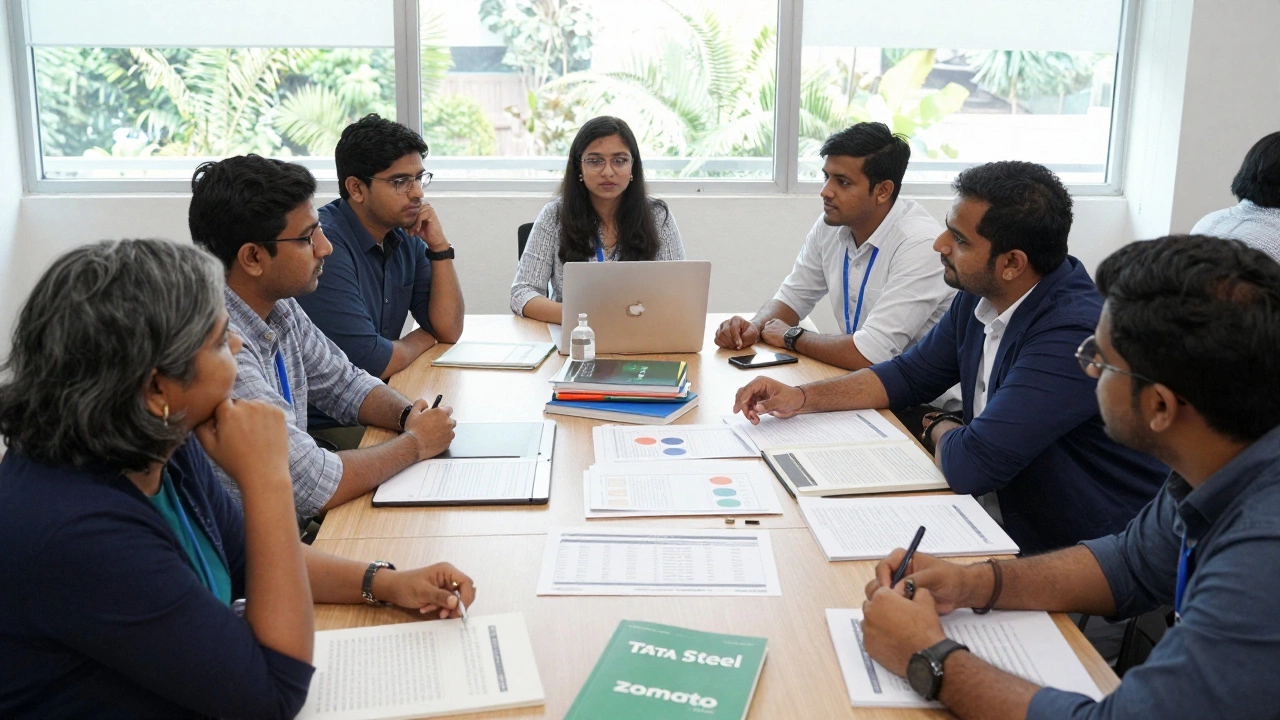
The best EMBA programs don’t teach theory. They teach decision-making under pressure. You’ll analyze real cases from companies like Tata Steel, Infosys, or Zomato. You’ll debate with peers who run factories, manage supply chains, or lead sales teams across Asia. That’s the real value: learning from people who’ve been where you are.

The hidden advantage: your network
At 40+, your professional network isn’t growing. It’s shrinking. Colleagues retire. Companies merge. Contacts fade. An EMBA rebuilds your network with people who are at the same stage: experienced, ambitious, and looking for the next step.
In one EMBA cohort I spoke with, 11 out of 48 students ended up collaborating on projects after graduation. One formed a consulting group for mid-sized manufacturers. Another launched a joint venture in logistics tech. These weren’t random connections. They were people who understood each other’s challenges because they’d lived them.
Your classmates aren’t 23-year-olds fresh out of college. They’re your peers. And that’s the most valuable thing an MBA gives you after 40: a tribe of people who get it.
How to pick the right program
Not all EMBA programs are equal. Here’s what to look for:
- Accreditation: Only consider programs accredited by AACSB, AMBA, or EQUIS. In India, look for AICTE approval and recognition from the Association of Indian Management Schools (AIMS).
- Class profile: Ask for the average age, years of experience, and job functions of past students. If most are under 35, it’s not designed for you.
- Curriculum: Does it include leadership, digital transformation, and global strategy? Or is it still stuck in 2005 with outdated case studies?
- Alumni outcomes: Ask for specific examples of graduates who moved into senior roles after 40. Don’t accept vague claims like "many alumni advance." Demand names and titles.
- Flexibility: Can you miss classes for emergencies? Is there an option for virtual modules? Life doesn’t pause for school.
Don’t choose based on brand alone. IIM Calcutta’s EMBA is excellent-but if you’re based in Chennai, the commute might cost you more than the tuition. Look at Symbiosis Pune, NMIMS Hyderabad, or even online options like ISB’s PGPpro. The degree matters. The fit matters more.
Is it worth it? The final verdict
If you’re still working, still learning, and still hungry to lead-yes, it’s worth it. If you’re doing it to escape your job, or because you think it’s the "right thing to do," then no.
The MBA after 40 isn’t a reset button. It’s a turbocharger. It takes your experience, adds structure, and gives you the language to move from doing to deciding. It doesn’t guarantee a promotion. But it guarantees you’ll be ready when the opportunity comes.
And in a world where AI is taking over routine tasks, the people who thrive are those who can think strategically, lead teams, and make decisions with incomplete data. That’s not a skill you learn in a webinar. It’s a mindset you build through real education-with real people who’ve been where you are.
You’re not too old. You’re too experienced to waste time on things that don’t matter. Choose wisely. Do the work. Then watch what happens.
Is it too late to get an MBA after 40?
No, it’s not too late. In fact, professionals over 40 often perform better in EMBA programs because they bring real-world experience to discussions. Schools actively seek older students for their perspective. The average age in top Indian EMBA programs is now 38-42. Many graduates land senior roles within a year of completing the program.
How much does an EMBA cost in India after 40?
EMBA programs in India range from ₹12 lakh to ₹25 lakh, depending on the institute. Top-tier schools like IIMs and XLRI charge closer to ₹20-25 lakh. Online or part-time options from institutions like ISB or NMIMS may cost ₹8-15 lakh. Some employers offer partial or full sponsorship-ask before you enroll.
Can I do an MBA after 40 without quitting my job?
Yes, and you should. Executive MBAs are designed for working professionals. Classes are held on weekends, evenings, or in modular formats (e.g., one week every two months). You’ll need to manage your time carefully, but quitting your job is unnecessary and often financially risky.
Will an MBA help me switch industries after 40?
It can help-but not by itself. An MBA gives you business fluency, not industry-specific skills. To switch industries, you’ll still need to build new networks, learn sector-specific tools, and possibly take on a transitional role. Many EMBA students use the program as a platform to pivot, but success requires active effort beyond the classroom.
Do companies value MBAs from older candidates?
Yes-especially if you’re aiming for leadership roles. Companies need leaders who combine experience with modern business thinking. An MBA signals you’ve updated your skills and are ready to handle strategic responsibilities. Many firms actively recruit EMBA graduates for roles in operations, supply chain, and general management.
What’s the biggest mistake people make when doing an MBA after 40?
Waiting too long to start. Many wait until they hit a wall-like being passed over for promotion or seeing younger colleagues move ahead. The best time to do an EMBA is when you’re still performing well but know you need more tools to go further. Don’t wait for a crisis. Act before you’re forced to.