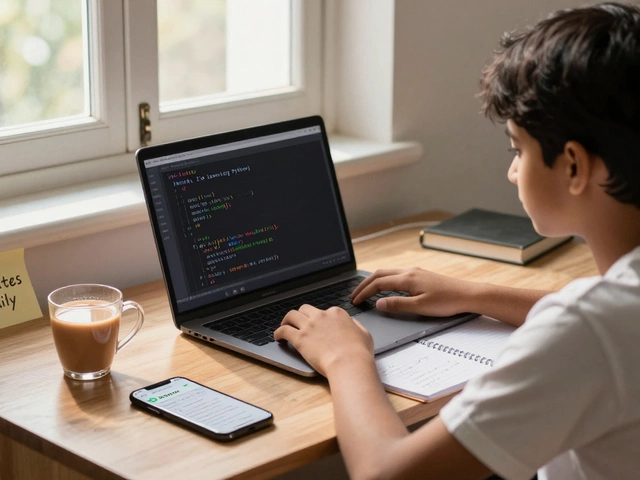
If you're staring at a blank screen wondering whether to start with Python or HTML, you're not alone. Thousands of people in Bangalore, Delhi, and small towns across India face this same question every month. The truth? Python is the better first language for most people - but only if you know why. Choosing the wrong starting point can waste months, drain motivation, and make you doubt if coding is even for you.
What You Actually Want to Build
Before you pick a language, ask yourself: what do you want to make? If your answer is a website with text, images, and buttons - then HTML is the tool. But if you want to automate tasks, analyze data, build a game, or create a tool that runs on your computer? Python is the answer. Most beginners don’t realize this yet. They think learning a language is like learning a new spoken language - you just start speaking. But coding is more like picking the right tool for a job. You wouldn’t use a hammer to screw in a bolt. And you shouldn’t start with HTML if your goal isn’t web design.
Let’s say you’re a student trying to get a part-time job. Companies in India are hiring entry-level Python developers for data entry automation, report generation, and even basic chatbots. You won’t find many jobs asking for HTML-only skills unless you’re applying to a design agency. HTML is a building block, not a standalone skill. Python is a full-blown programming language that can do way more.
HTML: The Skeleton, Not the Brain
HTML stands for HyperText Markup Language. It’s not a programming language - it’s a markup language. Think of it like the frame of a house. It defines where the walls go, where the windows are, and where the door opens. But it doesn’t make the lights turn on, the door lock, or the AC run. That’s JavaScript and CSS’s job. And even then, none of it does calculations, processes data, or makes decisions.
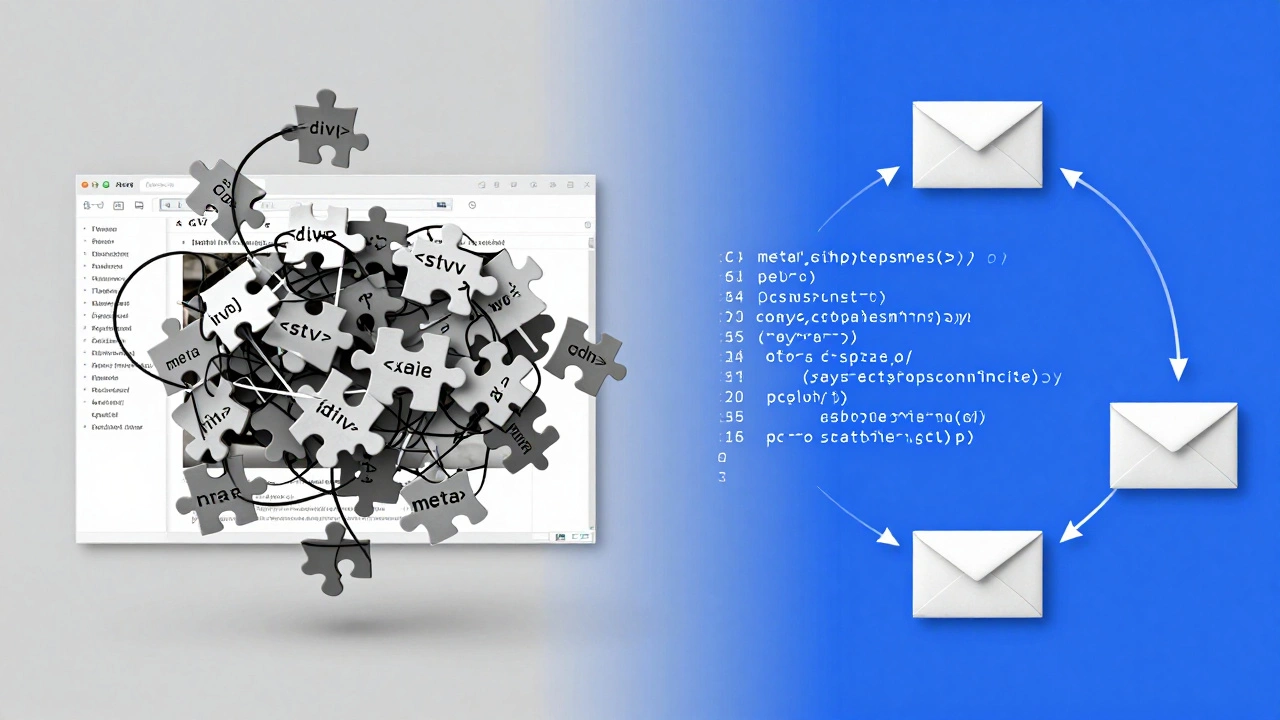
If you start with HTML, you’ll spend weeks learning tags like <div>, <span>, and <meta>. You’ll feel proud when you make a basic webpage with a heading and a photo. But then what? You hit a wall. You can’t make a button that adds numbers together. You can’t make a form that checks if an email is valid. You can’t automate sending 50 emails a day. That’s where people get stuck - and quit.
Python: The Brain That Does Real Work
Python is a programming language. It thinks. It calculates. It decides. It loops. It reads files. It talks to websites. It can turn a spreadsheet into a chart in 10 lines of code. In Bangalore, students use Python to auto-fill Google Forms for college applications. Teachers use it to grade multiple-choice tests. Small businesses use it to track inventory. You can run Python on your laptop without installing anything fancy.
Here’s a real example: You have a list of 200 student names and grades in a CSV file. You want to send each parent an email saying, “Your child scored 87% in Math.” With Python, you write five lines of code. With HTML? You can’t. Not even close. That’s the difference. Python gives you power. HTML gives you structure.
Learning Curve: What You’ll Actually Feel
HTML looks simple because it’s full of words in angle brackets. <p>Hello</p> - easy, right? But here’s the catch: you’ll quickly realize you need CSS to make it look good, and JavaScript to make it work. Now you’re juggling three things at once. Most beginners don’t know this until they’re halfway through a course and overwhelmed.
Python’s syntax is plain English. Print("Hello World"). If x > 5: print("Big number"). It reads like a sentence. No angle brackets. No semicolons. No weird syntax rules. You can write a working program on your first day. That feeling - the one where you see your code actually do something - is what keeps people going.
A 2024 study by the Indian Institute of Science surveyed 1,200 first-time coders. Those who started with Python completed their first project in 14 days on average. Those who started with HTML took 42 days - and 63% of them never finished a second project.
What Comes After? The Real Roadmap
Here’s the truth: you’ll learn HTML eventually. But not first. Think of it like this: if you want to drive a car, you don’t start by learning how to weld the frame. You learn how to turn the steering wheel, press the gas, and check the mirrors. Python is your steering wheel. HTML is the frame you’ll need later.
After Python, you can easily add HTML and CSS if you want to build websites. You’ll understand how data flows from your Python script into a webpage. You’ll know why you need <input> tags and how to process their values. That’s when HTML becomes useful - not before.
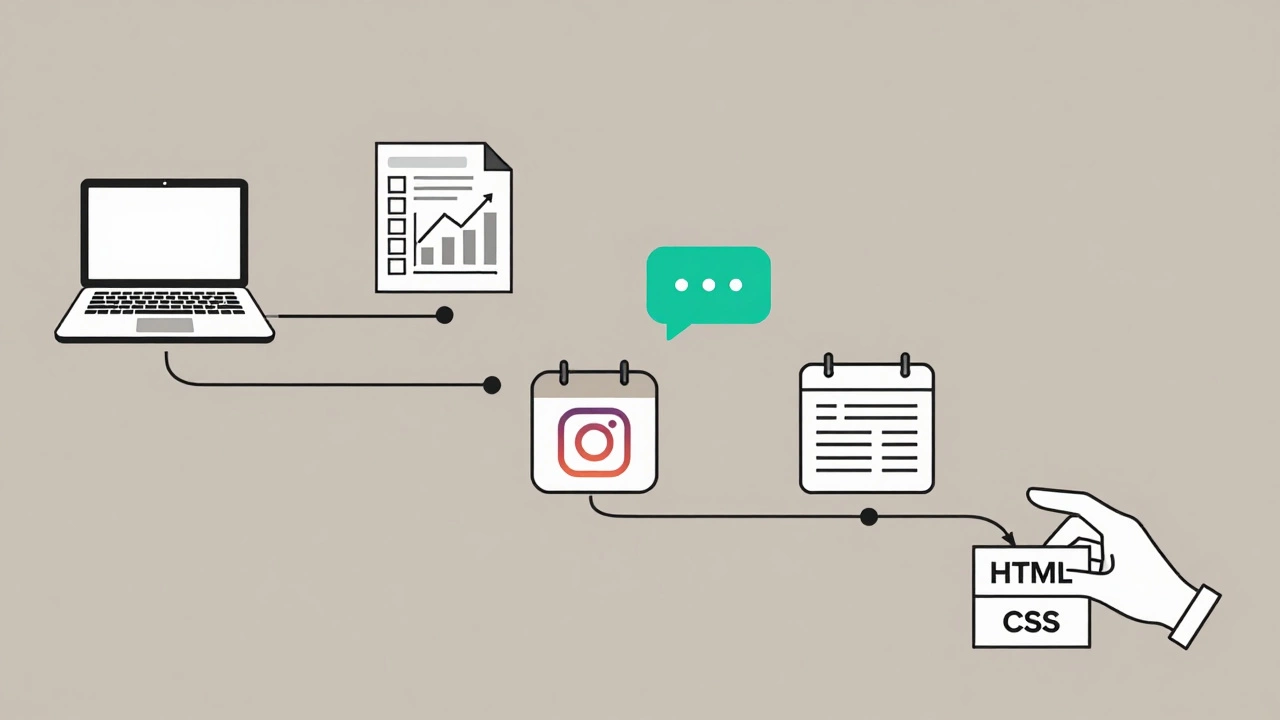
Want to build a mobile app? Python can help with frameworks like Kivy. Want to analyze sales data? Python with Pandas. Want to create a chatbot? Python with libraries like Rasa. Want to automate your Instagram posts? Python with Selenium. These are real skills people use in India right now.
When HTML Might Be the Right First Step
There are exceptions. If you’re applying for a web design internship, or you’re working with a team that builds websites, then HTML and CSS are your entry point. But even then, you’ll need JavaScript soon. And if you’re 15 and obsessed with making Instagram-like sites? Go ahead. But know this: you’ll hit a wall faster than you think. And you’ll need Python to get past it.
Another exception: if you’re learning for fun and you just want to make a personal blog with your photos and stories. Then HTML/CSS is fine. But if you ever want to add a comment section, a contact form, or a way to upload files - you’ll need Python or another programming language. So even then, you’re just delaying the real work.
What to Do Today
Here’s your simple plan:
- Go to python.org and download Python 3.12 (it’s free).
- Open a free online editor like Replit or Trinket - no installation needed.
- Type:
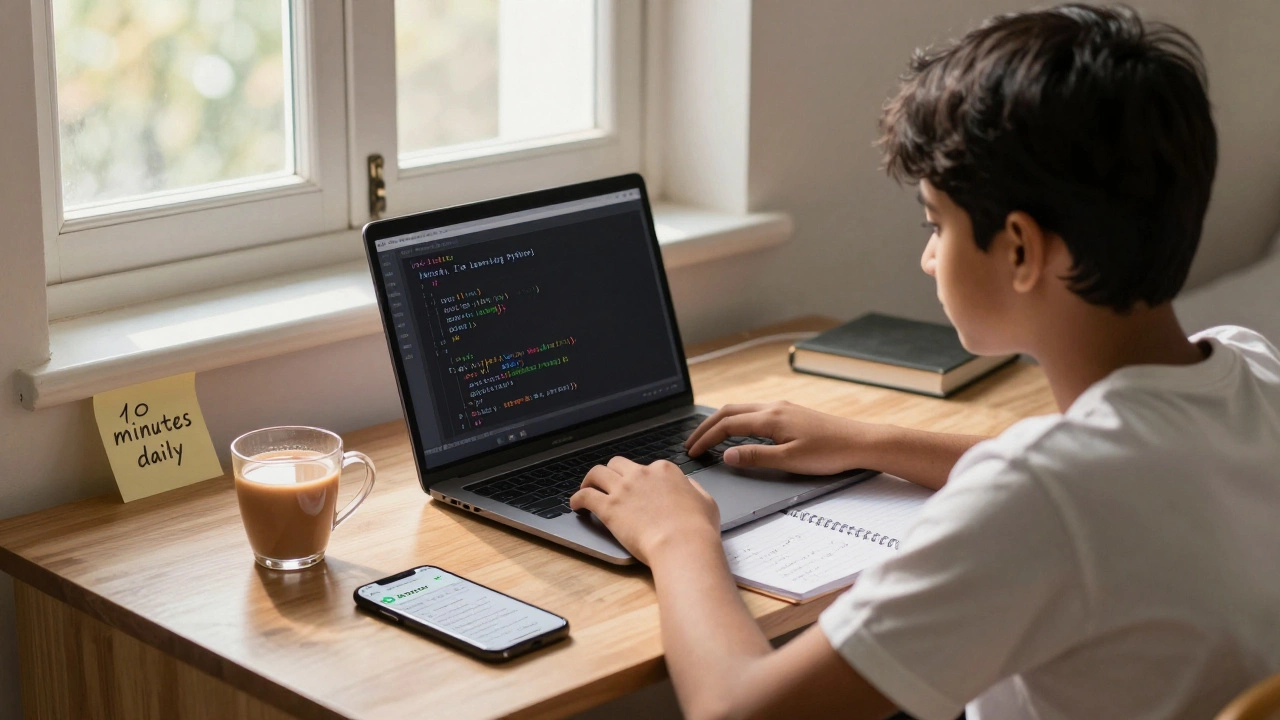
print("Hello, I'm learning Python")and hit run. - Do this every day for 10 minutes. No more, no less.
- After 7 days, try this: make a program that asks your name and says "Hi, [your name]!"
That’s it. You’re coding. No HTML. No CSS. Just you and Python. In two weeks, you’ll have built something real. In a month, you’ll be solving small problems on your own. And that’s the real goal - not memorizing tags, but being able to make things happen.
Common Myths About Python and HTML
Myth: HTML is easier, so start with it. It looks easier because it’s visual. But you’re not learning logic. You’re learning labels. Python teaches you how to think like a programmer.
Myth: Python is too hard for beginners. That’s what people say before they try it. Python’s error messages are clear. It doesn’t punish you for typos like JavaScript does. You’ll make mistakes - but you’ll understand them.
Myth: You need to learn both at the same time. You don’t. Learning three things at once is how people burn out. Master one. Then add the next.
Final Answer
Learn Python first. Not because HTML is useless - it’s not. But because Python gives you real power, real results, and real momentum. HTML is a piece of the puzzle. Python is the whole picture. Once you can write code that does something useful - even something small - you’ll never question whether you’re on the right path again.
Can I learn HTML and Python at the same time?
You can, but you shouldn’t. Most beginners end up confused. HTML is about structure. Python is about logic. Mixing them early means you don’t master either. Focus on one until you can build a small project - then add the other.
Is Python enough to get a job?
Yes, if you pair it with the right skills. Entry-level Python jobs in India often require basic knowledge of HTML/CSS for web-based tools, but the core work is done in Python. Many companies hire for automation, data cleaning, and scripting roles that need only Python and one library like Pandas or Requests.
How long does it take to learn Python well enough to use it?
You can start using Python for simple tasks in 2-3 weeks with 10-15 minutes a day. To feel confident solving real problems - like automating spreadsheets or sending emails - it takes about 2 months. Mastery takes years, but usefulness starts fast.
Do I need a degree to learn Python?
No. Thousands of students in India learn Python through free YouTube tutorials, apps like Sololearn, or platforms like Codecademy. Companies care about what you can build - not your degree. A GitHub repo with 3 small Python scripts beats a 4-year diploma in many cases.
What if I start with Python and later want to build websites?
Then you’ll learn HTML and CSS - and you’ll understand them better because you already know how code works. You’ll know why a <form> tag needs JavaScript to send data, and how Python can process that data on the server. That’s the advantage of starting with Python: you build a mental model of how systems work.
Next Steps
If you’re ready to start:
- Install Python from python.org - it’s free and works on any laptop.
- Use Replit.com to code in your browser - no setup needed.
- Do one small project every week: a calculator, a to-do list, a quiz game.
- Join a free Discord group for Indian coders - you’ll get help fast.
- After 30 days, revisit this question. You’ll know the answer for yourself.
Don’t wait for the perfect course. Don’t wait for a certificate. Start typing. Right now. The first line of code is the hardest. The rest? It just follows.