Global Syllabus Difficulty & Fit Quiz
Quiz Complete!
Here is your result based on the article content.
Your Best Fit Curriculum:
Calculating...
Imagine a student in Mumbai finishing their Class 12 board exams at midnight, only to realize that a peer in Shanghai has already been studying for their equivalent entrance test since they were six years old. Who actually worked harder? The question of which school syllabus is the hardest in the world doesn’t have a single answer because "hard" means different things to different people. For some, it’s about the sheer volume of content. For others, it’s the depth of critical thinking required or the pressure of high-stakes testing.
We often hear debates on social media pitting the CBSE (Central Board of Secondary Education) against the IB (International Baccalaureate) or the Chinese Gaokao. But to truly understand the landscape, we need to look beyond national pride and examine the structural demands of these systems. Is it the rote memorization of India’s boards, the holistic rigor of the IB, or the brutal elimination rate of East Asian exams?
The Indian Context: CBSE and the Pressure Cooker
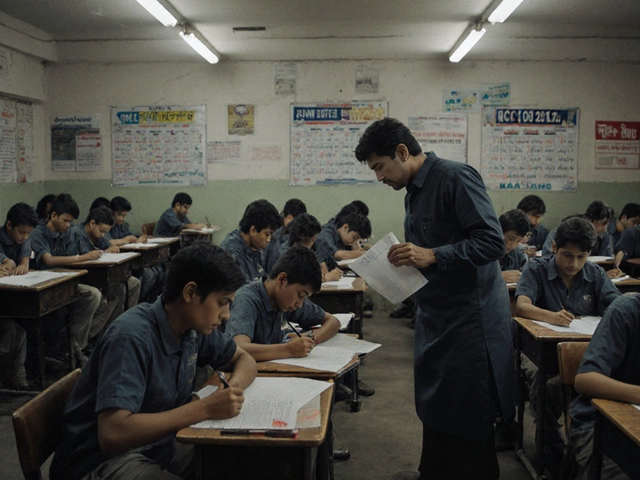
In India, the CBSE is one of the most widely followed boards, serving millions of students across public and private schools. It is designed to prepare students for competitive engineering and medical entrance exams like JEE and NEET. This creates a unique dynamic where the school syllabus is just the baseline; the real challenge lies in mastering material far beyond what is taught in class.
The difficulty here isn’t necessarily the curriculum itself, but the competitive intensity. A CBSE student might find the textbook manageable, but to secure a seat in a top-tier institute, they must solve thousands of practice problems. The syllabus is vast, covering Physics, Chemistry, Mathematics, and Biology in great detail. Unlike systems that emphasize project work, CBSE relies heavily on written examinations. One bad day can significantly impact your final score, adding immense psychological stress.
- Rote Learning Focus: Students are expected to remember complex formulas and definitions precisely.
- High Stakes: Board results often determine eligibility for pre-medical and pre-engineering courses.
- Volume: The syllabus covers a wide breadth of topics, leaving little room for deep specialization during school years.
The International Baccalaureate: Breadth Over Depth
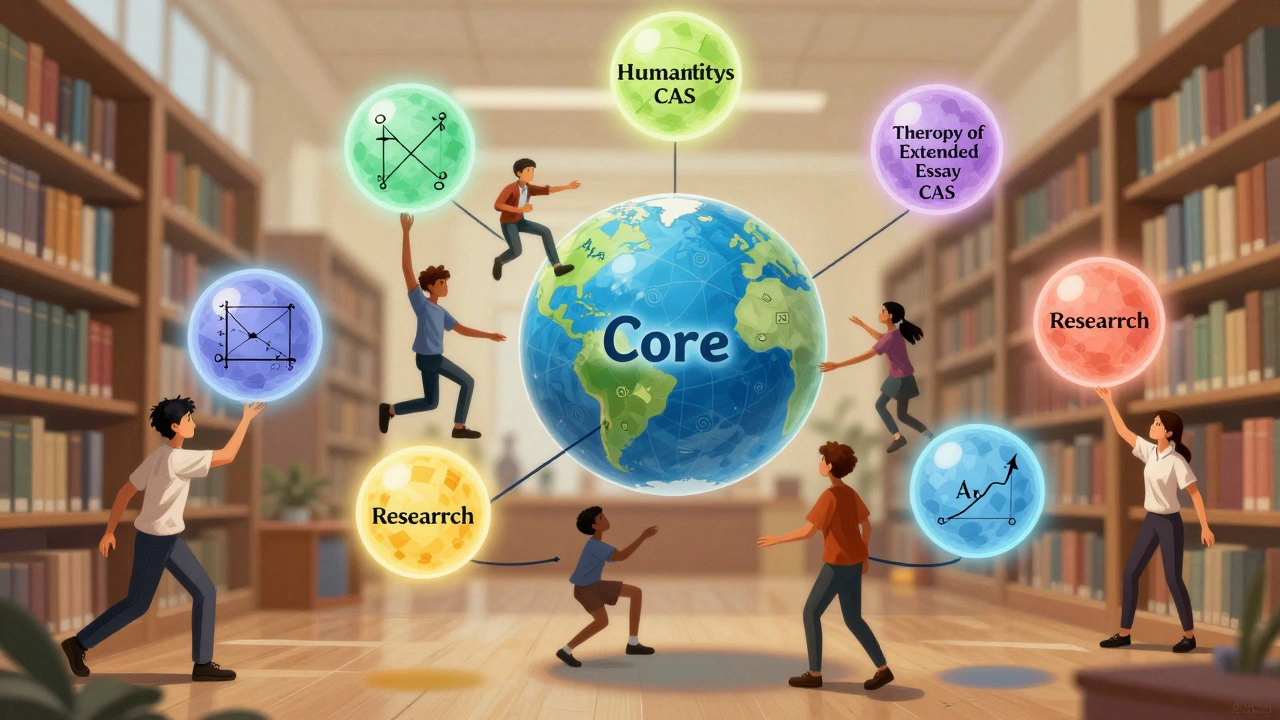
If CBSE is about depth within specific subjects, the International Baccalaureate Diploma Programme (IBDP) is about doing everything at once. Often cited as one of the hardest global curricula, the IB requires students to take six subjects: three at higher level and three at standard level. On top of that, they must complete the Core components: Theory of Knowledge (TOK), the Extended Essay (a 4,000-word research paper), and Creativity, Activity, Service (CAS).
The challenge with IB is not just academic; it is managerial. You cannot simply cram for an IB exam. The assessment includes internal assessments, oral presentations, and long-term projects. A student might ace a math test but fail the diploma if they don’t meet the CAS hours or submit a weak Extended Essay. This system forces students to be well-rounded, which can feel overwhelming for those who prefer to focus solely on academics.
| Curriculum | Primary Challenge | Assessment Style | Flexibility |
|---|---|---|---|
| CBSE (India) | Volume & Competitive Prep | Written Exams | Low |
| IB Diploma | Breadth & Research | Mixed (Internal + External) | Medium |
| A-Levels (UK) | Depth in Few Subjects | Final Exams | High |
| Gaokao (China) | Elimination Rate | Single High-Stakes Exam | Very Low |
A-Levels: Specialization Under Pressure
The UK’s General Certificate of Education Advanced Level (A-Level) takes a different approach. Instead of forcing students to study six subjects, A-Levels allow them to choose three or four subjects to specialize in. This sounds easier, but the depth required is significant. An A-Level in Physics, for example, covers material that often extends into first-year university concepts.
The difficulty here lies in the lack of safety nets. If you choose three STEM subjects, you have no humanities buffer. The exams are linear, meaning everything is tested at the end of the two-year course. There is no modular testing where you can pass parts along the way. This requires sustained performance over a long period. For students who know exactly what they want to study at university, this focused path is efficient. For undecided students, it can be risky.
The Gaokao: The Ultimate Elimination Test
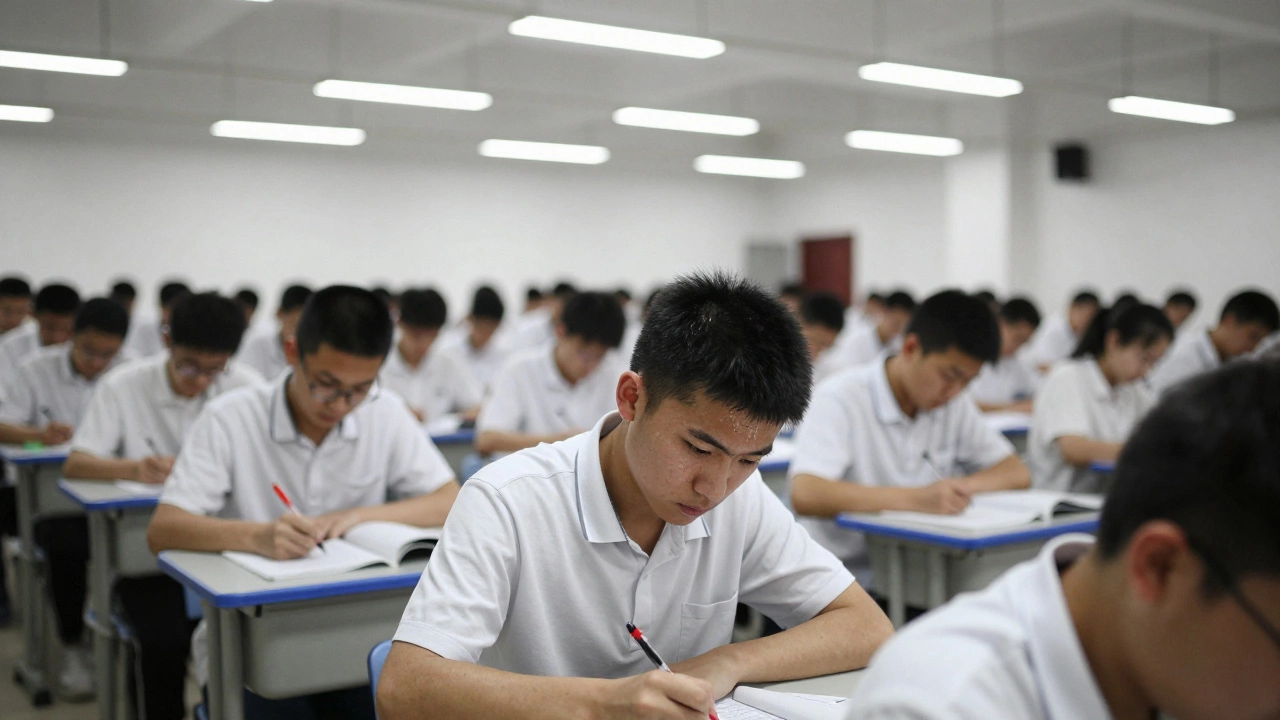
When discussing the hardest syllabus globally, the Gaokao in China cannot be ignored. This is not just a school exam; it is a life-defining event. Millions of students compete for spots in top universities. The syllabus covers Chinese language, foreign languages, mathematics, and either science or arts combinations.
The pressure is existential. In many regions, students attend "cram schools" until late at night, seven days a week, for years leading up to the exam. The margin for error is tiny. A difference of a few points can mean the difference between a prestigious university and a less desirable one. While the intellectual difficulty is comparable to other top systems, the psychological toll and the societal weight make it uniquely harrowing.
Why Comparing Difficulty is Flawed
It is tempting to declare one system the "winner" in terms of difficulty, but this overlooks cultural context. In Finland, the school system is considered easy by external standards, yet Finnish students consistently rank among the best in PISA scores. Why? Because the emphasis is on understanding rather than memorization, and there is less homework pressure.
Difficulty is subjective. A student strong in logic might find IB’s Theory of Knowledge frustratingly vague, while another might thrive on it. A student who excels in memorization might breeze through CBSE but struggle with IB’s open-ended essays. The "hardest" syllabus is the one that aligns least with a student’s natural strengths.
How to Choose the Right Path
If you are a parent or student deciding between these paths, consider the following factors:
- Learning Style: Do you prefer structured, clear-cut answers (CBSE/A-Levels) or open-ended exploration (IB)?
- University Goals: Are you aiming for local institutions (where CBSE is recognized) or global universities (where IB/A-Levels are preferred)?
- Stress Tolerance: Can you handle the continuous assessment pressure of IB, or do you perform better under single-exam conditions like Gaokao or A-Levels?
- Subject Interest: Do you want to specialize early (A-Levels) or keep options open (IB/CBSE)?
Ultimately, the goal of schooling is not just to survive the syllabus but to build skills for the future. Whether it’s the analytical rigor of CBSE, the holistic development of IB, or the specialized depth of A-Levels, each system offers valuable preparation. The key is matching the system to the individual.
Is CBSE harder than ICSE?
CBSE and ICSE are both rigorous Indian boards. ICSE is often perceived as having a broader syllabus with more emphasis on English literature and detailed conceptual understanding, making it slightly more voluminous. CBSE is more streamlined and aligned with national competitive exams like JEE and NEET. Neither is objectively "harder," but ICSE may require more reading and writing effort, while CBSE requires more problem-solving speed for competitive prep.
Which is better for US universities: IB or A-Levels?
Both IB and A-Levels are highly respected by US universities. IB is often viewed favorably because it demonstrates a well-rounded education with core components like TOK and CAS. A-Levels show deep specialization. Top US colleges accept both equally, so the choice should depend on whether you prefer breadth (IB) or depth (A-Levels).
Can CBSE students apply to Ivy League universities?
Yes, CBSE students can and do get into Ivy League universities. However, they often need to supplement their application with standardized tests like SAT/ACT, AP scores, and strong extracurricular profiles to demonstrate readiness for the American liberal arts education model, which differs from the specialized nature of CBSE.
What is the pass rate for the IB Diploma?
The global pass rate for the IB Diploma typically hovers around 75-80%. However, the percentage of students achieving the maximum score of 45 points is usually below 1%. This indicates that while passing is achievable with hard work, excelling requires exceptional dedication across all six subjects and the core requirements.
Is the Gaokao purely based on memory?
While memorization plays a role, especially in humanities subjects, the Gaokao also tests application, problem-solving, and critical analysis. Recent reforms have aimed to reduce rote learning and increase questions that require logical reasoning and real-world application, though the pressure to memorize vast amounts of data remains high due to the exam's format.